
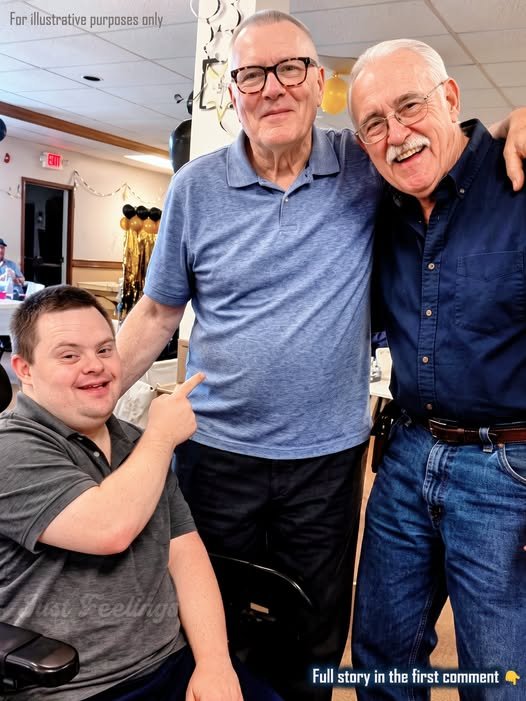
The Night Everyone Came to Celebrate Him
My husband’s retirement party was supposed to be the proudest night of his life.
At least, that was what everyone in town believed.
The banquet hall was glowing with soft golden lights. Round tables were covered in white cloths, silverware, and little candles in glass cups. A banner stretched across the front wall that read:
Congratulations, Martin — 38 Years of Service!
People kept walking up to my husband, shaking his hand, clapping him on the back, telling him what a fine man he was.
“You must be so proud, Helen,” one woman said to me.
I smiled politely.
“I am,” I answered.
But the truth was, I had spent the last three weeks sleeping badly.
Something had been wrong in our house for a long time, but I had not been able to name it.
Martin had become secretive. My brother Roy had started visiting more often. Whenever I entered the room, they stopped talking. Whenever Caleb came near them, they lowered their voices.
Caleb was my son. He was thirty-two years old, but his heart and mind were gentle in a way most people never understood. He had a developmental disability, and while he needed help with certain parts of daily life, he noticed more than people gave him credit for.
He remembered patterns.
He remembered promises.
And he remembered fear.
That night, he sat beside me in his best blue shirt, tapping his fingers against his knee while the music played.
Then suddenly, he grabbed my sleeve.
“Momma,” he whispered.
I turned to him with a smile.
His lower lip was shaking.
“Daddy and Uncle Roy did the bad thing again.”
Caleb’s Warning
For a moment, the noise of the hall seemed to fall away.
Across the room, Martin stood beneath the gold balloons, laughing as two former coworkers posed for a photo with him. Beside him, Roy kept one hand tucked into his jacket pocket, his eyes moving around the room like he was looking for an exit.
I placed my hand over Caleb’s.
“What are you trying to tell me, sweetheart?”
Caleb swallowed hard.
“They said I would go away if I told you.”
My whole body went still.
“Who said that?”
“Daddy and Uncle Roy.”
I glanced at Martin again. He looked perfect. Calm. Smiling. Respected.
That was the thing about Martin. He always knew how to look like the man everyone wanted him to be.
“What bad thing?” I asked softly.
Caleb’s eyes filled with tears.
“The paper thing,” he whispered. “The blue folder. The money paper. Daddy used to do it with you.”
My heart began to pound.
“What do you mean, with me?”
Caleb looked down at his hands.
“He said you already said yes. He said you signed it before. He said I had to make my name like he showed me. Uncle Roy held the paper still.”
I felt the room tilt slightly beneath me.
For weeks, I had been finding strange things. Bank statements that came late. Envelopes opened before I saw them. Calls from Caleb’s care program asking about missing payments Martin claimed he had handled.
Then one afternoon, I found a copy of my own signature on a document I knew I had never signed.
It was approval for a withdrawal from Caleb’s special needs trust.
That trust had been created by my parents before they passed away. It was meant to protect Caleb for the rest of his life. It paid for his therapy, his support services, his medical needs, and the small apartment program he hoped to join one day.
No one was supposed to touch it without proper approval.
Not Martin.
Not Roy.
Not even me, unless it was for Caleb’s direct care.
And now Caleb was telling me that the “bad thing” had happened again.
At my husband’s retirement party.

The Blue Folder
I looked toward the side hallway near the coatroom.
There it was.
Roy’s blue folder.
It was half-hidden on a chair under his coat.
My mouth went dry.
Three weeks earlier, I had taken the first document to a lawyer named Evelyn Grant. She was calm, sharp, and kind in a way that made me feel safe the moment I sat across from her desk.
“Helen,” she had said, looking at the paper, “this signature does not look right.”
“It looks like mine,” I said.
“It looks copied,” she replied.
That sentence changed everything.
After that, Evelyn helped me request records. Quietly. Carefully. Legally.
We found twelve withdrawals over six years.
Some were small enough to hide. Some were large enough to make me sick.
The money had not gone to Caleb’s care.
It had gone to a business Roy owned.
A business Martin had told me failed years ago.
Evelyn had urged me not to confront them alone. She told me to gather proof, protect Caleb, and choose the right moment.
I had planned to speak after the party.
I had planned to let Martin have his night and deal with the truth the next morning.
But then Caleb whispered, “again.”
That meant there was another document.
That meant they had brought the fraud into the room where our friends were smiling and eating cake.
I stood slowly.
Caleb grabbed my hand.
“Momma, don’t let them send me away.”
I bent and kissed his forehead.
“No one is sending you away,” I said. “Not now. Not ever.”
The One Sentence
As I walked toward the front of the room, Roy saw me first.
His face changed instantly.
He touched Martin’s shoulder and pointed.
Martin turned.
For the first time that night, the smile slipped from his face.
I climbed the small stage, where the microphone waited beside the retirement cake. A few people chuckled, thinking I was about to give a loving speech.
Someone clinked a glass.
“Speech from the wife!” a man called.
Martin began walking toward me quickly.
“Helen,” he said under his breath, “not now.”
I looked at him.
Then I took the microphone.
The room quieted.
I could see Caleb at our table, holding his hands together, trying so hard to be brave.
I could see Roy standing frozen near the hallway.
And I could see my husband, the man everyone had spent the evening praising, staring at me with warning in his eyes.
So I said the one sentence that made everyone in the room hold their breath.
“Martin, before anyone raises another glass, please explain why Caleb’s trust fund has twelve withdrawals tied to Roy’s business and my forged signature on every approval.”
Silence fell so hard it felt like the candles had stopped flickering.
Martin’s face turned gray.
Roy whispered something I could not hear.
Then Martin laughed.
It was a small, fake laugh. The kind he used when he wanted people to think I was being dramatic.
“Helen is tired,” he said, reaching for the microphone. “This is not the time—”
I stepped back before he could touch it.
“No,” I said clearly. “This is exactly the time.”
The Truth Everyone Heard
A woman near the front table covered her mouth.
One of Martin’s old supervisors looked from him to me.
Roy tried to move toward the side door, but Evelyn Grant stood up from a table near the back.
Martin had not noticed her before.
I had invited her as my guest.
Beside her was David Lewis, the accountant who had reviewed the records. And beside him sat Mrs. Palmer, Caleb’s advocate from his support program.
Martin saw them, and all the color drained from his face.
Evelyn did not shout. She did not accuse wildly. She simply lifted a folder of copies.
“These documents have already been submitted for review,” she said. “Mrs. Helen Carter has taken steps to protect her son’s trust.”
The room began to murmur.
Martin leaned toward me, his voice low and sharp.
“You have no idea what you’re doing.”
For thirty-seven years of marriage, that kind of sentence had made me shrink.
Not that night.
That night, I looked him in the eye.
“I know exactly what I’m doing,” I said. “I’m choosing my son.”
Caleb stood up then.
His chair scraped loudly against the floor.
Every head turned toward him.
His hands were shaking, but his voice came out clear enough for the room to hear.
“I didn’t want to write my name,” he said. “Uncle Roy said I had to. Daddy said Momma already said yes.”
My heart broke and healed in the same moment.
Because my son, who had been frightened into silence, was finally being heard.
Roy snapped, “He doesn’t understand anything.”
I turned on him so fast he stopped speaking.
“He understands right and wrong,” I said. “That is more than I can say for some people in this room.”
No one laughed.
No one moved.
Even the music had stopped.
Martin’s Mask Slipped
Martin tried again.
He straightened his tie and looked at the guests as if he could still rescue his reputation.
“I handled the family finances,” he said. “Helen never cared about paperwork. Roy needed temporary help. It was all going back.”
David, the accountant, stood.
“The first withdrawal was six years ago,” he said calmly. “The money did not return.”
A low gasp moved through the room.
Martin’s jaw tightened.
Roy pointed at me.
“She’s making this public to humiliate us.”
I almost laughed at that.
For years, I had protected Martin’s image. I excused his coldness as stress. I excused his controlling habits as worry. I excused his secrecy as responsibility.
But not anymore.
“You humiliated yourselves,” I said. “I only brought the truth into the light.”
The manager of the banquet hall stepped forward and quietly asked if we needed assistance. Evelyn nodded and made a phone call.
No one tackled anyone. No one screamed. There was no wild scene.
There was only truth, sitting heavy in a room where lies had been dressed up in a retirement suit.
Martin looked at me then, really looked at me, and I saw something I had not seen in years.
Not love.
Not regret.
Fear.
Because he knew the room no longer belonged to him.
It belonged to the truth.

The Party Ended Differently
The retirement cake was never cut.
Guests left quietly, some in shock, some with tears in their eyes.
A few came to my table and hugged Caleb gently.
“You did the right thing,” one woman told him.
Caleb looked at me, unsure.
I nodded.
He smiled a tiny smile.
That night, I took Caleb home with me. Not to Martin’s house. To mine.
For years, I had called it “our house,” even though my parents had helped us buy it. But by then, Evelyn had already checked the deed.
It was in my name too.
Martin could not push us out.
In the weeks that followed, the investigation confirmed what we already knew. Martin and Roy had used copied signatures, pressured Caleb, and moved money into Roy’s failing company. They had convinced themselves it was “family money,” as if Caleb’s future was a spare wallet they could open whenever they pleased.
The court froze the remaining trust immediately.
Roy’s business accounts were reviewed.
Martin’s retirement became nothing like the celebration he had imagined.
I will not pretend it was easy. Betrayal never ends in one dramatic night. It lingers in paperwork, phone calls, sleepless mornings, and memories you suddenly see differently.
But every hard day had one clear purpose.
Protect Caleb.
And we did.
Caleb’s New Beginning
Six months later, Caleb moved into the supported apartment he had dreamed about.
It was only twelve minutes from my house. He had a small kitchen, a blue sofa, and a window where he kept three little potted plants.
On his first night there, he called me five times.
Not because he was scared.
Because he was proud.
“Momma,” he said, “I locked my door by myself.”
I cried after that call.
Not sad tears.
The kind that come when you realize someone you love has survived something that should never have happened, and somehow still believes the world can be good.
The missing money did not all come back quickly, but enough was recovered to restore Caleb’s care plan. The rest became part of a legal settlement. More importantly, Martin and Roy could never touch his trust again.
As for Martin, he wrote one letter.
It began with excuses.
It ended with something close to an apology.
I did not read it to Caleb. He did not need more confusion from the man who had frightened him.
Instead, I told my son the only truth that mattered.
“You were brave.”
Caleb shook his head.
“I was scared.”
I smiled and held his hand.
“Brave people are scared too.”
What I Learned That Night
People still talk about Martin’s retirement party.
Some call it a scandal.
Some call it the night a respected man was exposed.
But I do not think of it that way.
To me, it was the night my son found his voice.
It was the night I stopped protecting a reputation and started protecting a life.
It was the night a room full of people learned that a gentle heart is not a weak heart.
Caleb still has difficult days. He still worries sometimes that people will not believe him. But he is learning that his words matter.
Every Sunday, he comes over for dinner. He brings laundry he insists he can do himself, then asks me to check if he did it right. He tells me about his plants, his neighbors, and the volunteer job he started at the library.
And sometimes, when he catches me looking at him too long, he grins and says, “Momma, I’m okay.”
He is.
And so am I.
Because the truth may have silenced that room for a moment.
But after that silence, my son’s whole life finally began to speak