
The Lie We Grew Up Believing
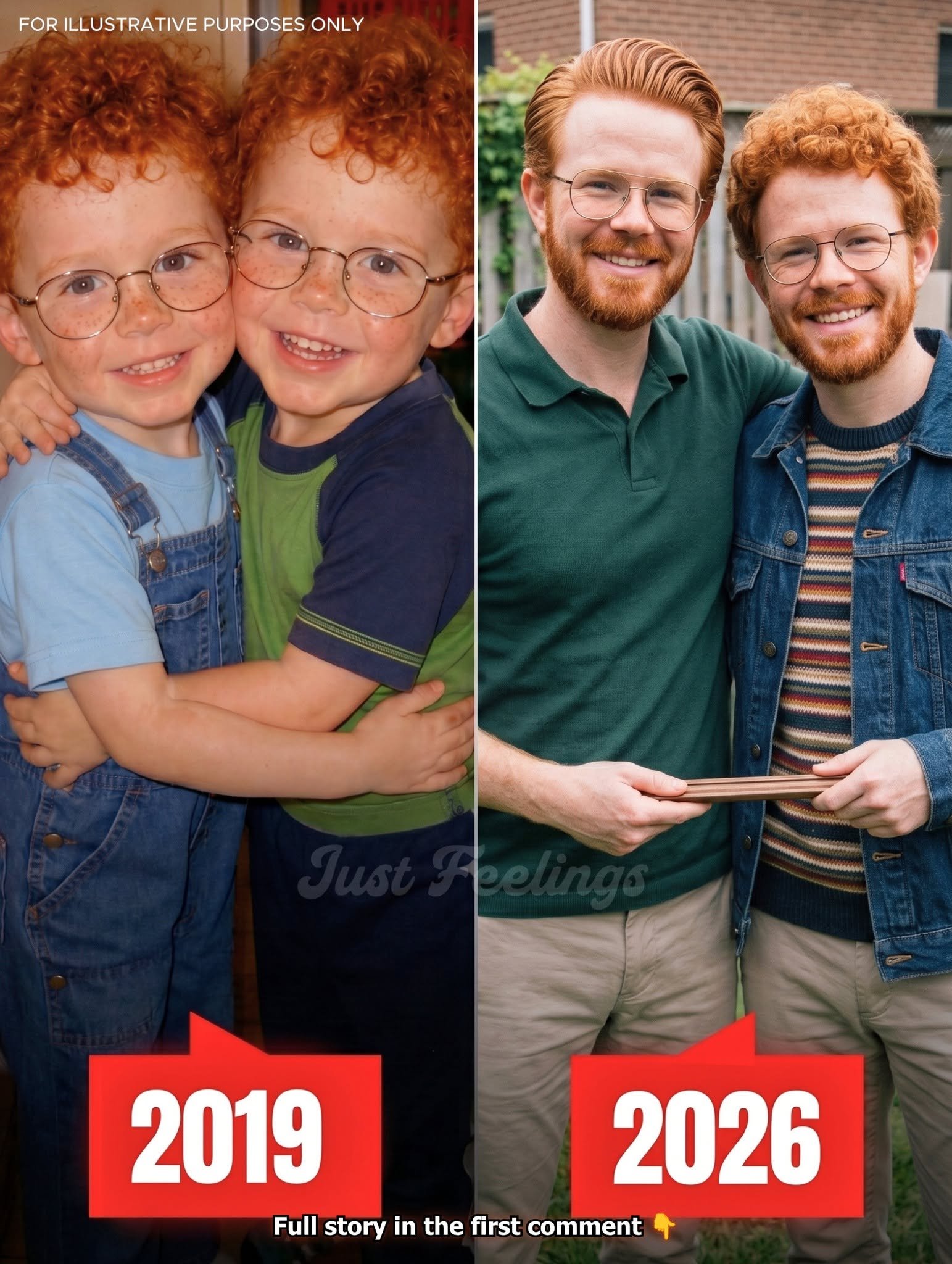
My twin brother, Noah, and I were three years old when we were adopted.
That was the story we always knew.
Before that, we had lived in an orphanage because our biological mother had abandoned us at birth.
At least, that was what our adoptive mother, Clara, told us.
She never said it gently.
She said it like a reminder. Like a warning. Like a debt we could never repay.
“Don’t forget,” she would say whenever one of us displeased her, “you’d still be rotting away in an orphanage if it weren’t for us.”
Or, “You should be grateful we saved you from such a miserable life.”
When I was little, I didn’t fully understand what those words meant. I only knew they made something inside me shrink. Noah would always reach for my hand under the dinner table, squeezing it twice.
That was our secret language.
Two squeezes meant, I’m here.
Our adoptive father, David, was different.
He was warm, patient, and steady. He never treated us like charity cases. He treated us like his children.
He showed up to every school play, even when I only had one line. He taught Noah how to ride a bike. He made pancakes shaped like animals on Saturday mornings, though they mostly looked like strange clouds.
Whenever Clara made one of her cruel remarks, Dad would set down his fork and say, “That’s enough, Clara. They are our children, not a favor we did for the world.”
For a while, his love was loud enough to drown out her bitterness.
Then, when Noah and I were ten, Dad passed away.
And the house changed overnight.
After Dad Was Gone
Without Dad, Clara stopped pretending.
She no longer corrected herself when she snapped at us. She no longer smiled for school photos or parent-teacher meetings. She no longer hid the fact that, somehow, our very presence annoyed her.
By the time we were teenagers, Noah and I had learned to take care of ourselves.
I cooked simple dinners. Noah fixed things around the house because Clara would complain for days if something broke. We both got part-time jobs as soon as we were old enough, not because Clara asked, but because we hated asking her for anything.
Still, I tried to be good.
I studied hard. I kept my room clean. I remembered her birthday every year. Some foolish part of me kept hoping that if I became grateful enough, quiet enough, useful enough, she might finally look at me like a daughter.
She never did.
On the day of our high school graduation, Noah and I searched the crowd for her face.
She wasn’t there.
After the ceremony, we came home still wearing our caps and gowns. Clara was sitting in the living room, watching television.
“We graduated,” Noah said, his voice flat.
She barely looked up.
“Oh, great,” she said. “You’re adults now. Time for you to get out of my house.”
That night, Noah and I packed our things into two old suitcases and left.
We slept on the floor of a friend’s apartment for three weeks before we found a tiny room near campus. We worked, studied, saved, and slowly built lives of our own.
Noah became a mechanic, then opened a small repair shop with a friend. I became a social worker, maybe because some part of me wanted to help children who felt unwanted the way we once had.
Clara barely contacted us.
And yet, yesterday was her birthday.
Despite everything, I still bought her a cake.

The Birthday Visit
I don’t know why I went.
Maybe because Dad had always told us that kindness should not depend on whether someone deserved it.
Maybe because the child inside me still wanted Clara to open the door, see me standing there, and soften.
Maybe because even after all those years, I still thought adoption meant something sacred.
So after work, I stopped by the small bakery near my office and bought a vanilla cake with white frosting and strawberries on top. It was the kind Dad used to buy for her.
As I drove to Clara’s house, I told myself not to expect anything.
Just say happy birthday. Give her the cake. Leave.
When I arrived, her front door was slightly open.
That was strange. Clara was the kind of woman who checked the locks twice even in the middle of the day.
I stepped onto the porch and called softly, “Clara?”
No answer.
I pushed the door open a little more.
From the kitchen, I heard voices.
Clara was speaking to someone. Her mother, Beatrice, I realized. Beatrice was in her eighties now and had always been as sharp and cold as broken glass.
I walked down the hallway, holding the cake box carefully in both hands.
I was just about to call out again when Clara laughed.
Not a happy laugh.
A cruel one.
Then she said, “They’re so stupid. They believed every single thing I told them for the past twenty years.”
I froze.
Beatrice murmured something I couldn’t hear.
Then Clara said clearly, “Everything went exactly according to plan.”
My fingers tightened around the cake box.
I pressed myself against the wall, my heart suddenly pounding so hard I could hear it in my ears.
Beatrice asked, “And they still think their mother abandoned them?”
Clara snorted.
“Of course they do. Why wouldn’t they? I told them that from the beginning.”
My breath caught.
Then Clara said the words that tore my childhood in half.
“Their mother never abandoned them. She came back. She begged for them. She wrote letters for years.”
The cake slipped from my hands.
It hit the floor with a soft, terrible thud.
The Truth Behind the Wall
The voices in the kitchen stopped.
For three seconds, the whole house went silent.
Then Clara appeared in the doorway.
Her face went pale when she saw me.
Behind her, Beatrice sat at the kitchen table with a cup of tea, her mouth slightly open.
I looked down at the ruined cake, then back at Clara.
“What did you just say?” I whispered.
Clara’s face hardened quickly, the way it always did when she felt cornered.
“You shouldn’t sneak around listening to private conversations.”
“What did you just say about our mother?”
She crossed her arms. “You heard wrong.”
“No,” I said, my voice shaking. “I heard every word.”
For the first time in my life, Clara looked afraid of me.
Not because I was threatening her. I wasn’t.
She looked afraid because the lie she had carried for twenty years had finally grown too heavy to hide.
Beatrice pushed back her chair. “Clara, don’t.”
But Clara snapped, “It doesn’t matter now. They’re grown.”
“They?” I repeated. “You mean Noah and me? The children you told were unwanted? The children you made feel like burdens their whole lives?”
Clara looked away.
And that was when I knew.
It was true.
My mother had not abandoned us.
Someone had stolen the truth from us.
“Tell me everything,” I said.
Clara laughed bitterly. “You want the truth? Fine.”
She walked back into the kitchen, and I followed on trembling legs.
The Woman Named Emily
Clara sat down as if she were the injured one.
“Your mother’s name was Emily Hart,” she said. “She was young. Poor. Alone. She gave birth to twins and couldn’t take care of you.”
“That’s not abandonment,” I said.
“She left you at a children’s home.”
“Why?”
Clara pressed her lips together.
Beatrice answered quietly, “Because she was sick.”
Clara shot her mother a warning look, but Beatrice didn’t stop.
“She had complications after the birth,” Beatrice continued. “No family nearby. No money. She was told the children’s home could keep you temporarily until she recovered.”
I gripped the back of a chair.
Temporarily.
That one word nearly broke me.
Clara’s jaw tightened. “David and I had been trying to adopt for years. We saw you both there. He fell in love with you instantly.”
My throat burned at the mention of Dad.
“He wanted children,” Clara continued. “He wanted a family. And when the agency said your mother’s situation was unstable, we applied.”
“But she came back,” I said.
Clara didn’t answer.
“She came back,” I repeated.
“Yes,” Clara said finally. “She came back.”
The kitchen seemed to tilt.
“She was too late,” Clara added quickly. “The process had started.”
“But she wrote letters.”
Clara stared at the table.
I turned toward the hallway. “Where are they?”
“Olivia—”
“Where are they?”
Clara flinched when I said my own name like that, sharp and clear.
For years, she had made me feel small.
But not that day.
Not with my mother’s stolen love hanging in the air between us.
Finally, Clara stood and walked to the pantry. She reached behind a stack of old serving trays and pulled out a dusty metal box.
She placed it on the table.
My hands shook so badly I could hardly open it.
Inside were envelopes.
Dozens of them.
Some yellowed with age. Some newer. All addressed to Clara and David.
And on every one, the same name was written in careful handwriting.
Emily Hart.

The Letters We Never Received
I opened the first letter.
My eyes blurred before I finished the first sentence.
Please tell Olivia and Noah that I love them. Please tell them I did not leave because I wanted to. I am working every day to become stable enough to bring them home.
I pressed one hand over my mouth.
There were birthday cards.
To my sweet Olivia and my brave Noah on your fourth birthday.
To my beautiful twins on your seventh birthday.
To my children, who may not remember me, but whom I remember every morning before I open my eyes.
I found a photo tucked inside one envelope.
A young woman stood outside a diner in a blue uniform, smiling nervously at the camera. She had my eyes.
My exact eyes.
On the back, she had written:
For Olivia and Noah. So they will know my face if we ever meet again.
I sat down because my knees could no longer hold me.
All my life, I had imagined my biological mother as a shadow. A woman who had walked away without looking back.
But she had a name.
She had handwriting.
She had a face.
And she had loved us.
“Did Dad know?” I asked.
Clara’s face twisted.
“No.”
The answer hurt, but it also saved something in me.
Dad hadn’t lied.
Dad hadn’t let us suffer on purpose.
“He thought she stopped writing after the adoption,” Clara said. “He thought she accepted it. I told him the first few letters were just legal matters. After that, I hid the rest.”
“Why?” I whispered.
Clara looked at me with eyes full of anger, shame, and something even uglier.
“Because David loved you too much.”
I stared at her.
“He loved you and Noah like you were miracles,” she said. “And I was afraid that if your real mother came back, he would help her. I was afraid he would choose what was right for you instead of what I wanted.”
“So you let us believe she threw us away?”
Clara said nothing.
That silence was her confession.
Noah’s Anger
I took the box and left without another word.
Clara called after me once, but I didn’t turn around.
I drove straight to Noah’s apartment.
When he opened the door, he smiled at first. Then he saw my face.
“What happened?”
I held up the metal box.
“Noah,” I said, and my voice broke. “She lied to us.”
We sat on his living room floor until midnight, reading every letter.
Noah cried silently.
That hurt more than if he had shouted.
My brother had always been the stronger one. The protector. The one who made jokes when life got too heavy.
But that night, he looked like the little boy who used to squeeze my hand under the dinner table.
“She looked for us,” he said.
“Yes.”
“She loved us.”
“Yes.”
His face crumpled.
Then anger came.
Not wild anger. Not reckless anger. A deep, quiet anger that had nowhere to go.
“She stole our mother from us,” he said.
I nodded.
For a long time, neither of us spoke.
Then Noah picked up the newest envelope.
It was dated only three months earlier.
My heart jumped.
“She’s still writing,” he said.
Inside was a letter shorter than the others.
Dear Clara,
I know Olivia and Noah are adults now. I am asking one last time. Please give them my address. I do not want money. I do not want to disturb their lives. I only want them to know they were loved.
At the bottom was an address.
Emily Hart.
Port Haven, Maine.
Noah looked at me.
We both knew what we had to do.
The Drive to Port Haven
We left the next morning.
Port Haven was five hours away, a quiet coastal town with gray-blue water, white houses, and gulls circling above the docks.
The address led us to a small flower shop called Hart & Bloom.
My hands went cold when I saw the name painted on the window.
Noah parked across the street, but neither of us moved.
“What if she doesn’t want us anymore?” I whispered.
Noah looked at me gently. “Olivia, she wrote for twenty years.”
That was enough.
We crossed the street together.
A bell rang as we stepped inside.
The shop smelled like roses, soil, and rain. Buckets of flowers lined the walls. Behind the counter, a woman was wrapping yellow tulips in brown paper.
She looked up.
The paper slipped from her hands.
For a moment, nobody spoke.
She was older than the photo, of course. There were lines around her eyes, silver in her brown hair, and a softness in her face that made my chest ache.
But I knew her.
Some part of me knew her before she said a word.
Her eyes moved from me to Noah.
Then her hands flew to her mouth.
“Olivia?” she whispered. “Noah?”
I broke.
The sound that came out of me was not graceful or calm. It was the sound of twenty years of pain finally finding a door.
She came around the counter, then stopped, as if afraid to touch us without permission.
Noah stepped forward first.
“Mom?” he said.
Emily began to cry.
And then we were in her arms.
What Really Happened
We stayed in that flower shop for hours.
Emily closed the store early and took us upstairs to her small apartment above it. The walls were filled with plants, framed photographs of the ocean, and two empty picture frames on a shelf.
“They were for you,” she said softly. “I kept hoping one day I’d have photos to put in them.”
She told us everything.
She had been twenty-one when we were born. Our biological father had left before she gave birth. She worked double shifts at a diner and lived in a rented room.
After the birth, she became severely ill and was hospitalized. A nurse suggested a children’s home that sometimes provided temporary care for struggling mothers.
“I signed papers allowing them to care for you while I recovered,” Emily said. “I never signed my heart away.”
When she returned weeks later, she was told an adoptive family had petitioned for custody. She fought, but she had no money for a good lawyer. Notices were missed. Dates were changed. By the time she understood what was happening, the adoption had gone through.
“I begged to at least send letters,” she said. “I was told it would be up to your adoptive parents.”
She looked down at her hands.
“I wrote anyway.”
Every birthday. Every Christmas. Every first day of school she imagined.
She never had more children.
“I didn’t stop being your mother,” she said. “I just had to learn how to live with empty arms.”
Noah reached for my hand.
Two squeezes.
I’m here.
Only this time, someone else was there too.

Facing Clara
A week later, Noah and I went back to Clara’s house.
This time, Emily came with us.
Clara opened the door and went completely still.
For the first time since I had known her, she had no cruel words ready.
Emily stood straight, but her voice was calm.
“I’m not here to punish you,” she said. “I’m here because my children deserve the whole truth.”
Clara’s eyes filled with tears, but I no longer knew whether they were for us, for Emily, or for herself.
“I was afraid,” Clara whispered.
Emily nodded sadly. “So was I. But fear does not excuse stealing years from children.”
Clara covered her face.
For a long moment, the only sound was her crying.
Then she went to the hallway closet and returned with another folder. Adoption documents. Old photos. Medical records. Things that belonged to our beginning.
“I kept them,” she said. “I don’t know why.”
I knew why.
Even lies leave evidence behind. Even guilt needs somewhere to sleep.
Noah took the folder, but he did not thank her.
I looked at Clara and felt something complicated.
I did not forgive her that day. Forgiveness is not a light switch.
But I also did not hate her the way I thought I would.
I saw a lonely, bitter woman who had mistaken possession for love and control for family.
She had hurt us deeply.
But she had not destroyed us.
A New Kind of Family
In the months that followed, our lives changed slowly.
Emily did not try to force herself into the place of “Mom” overnight. She never demanded affection. She never acted as if biology erased the years we had survived without her.
Instead, she showed up gently.
She called every Sunday evening. She remembered that Noah hated raisins and that I loved lavender tea. She sent old letters she had written but never mailed. She invited us to Port Haven whenever we could visit.
The first photo we gave her was taken outside her flower shop.
Noah stood on one side of her, I stood on the other, and Emily held both our hands like she was afraid the world might take us again if she let go.
She placed that photo in one of the empty frames.
The second frame, she said, was for the future.
As for Clara, our relationship remained careful.
She wrote us a letter a few weeks after the confrontation. It was not perfect. Some sentences still sounded defensive. But one line stayed with me.
I told myself I was giving you a better life, but the truth is, I was protecting the life I wanted, not the life you deserved.
It was the closest thing to honesty she had ever given us.
Noah chose not to see her for a while, and I respected that.
I visited once, months later, not because everything was healed, but because I wanted to leave the past without becoming hard like her.
Clara looked smaller than I remembered.
Before I left, she said, “Your father would be ashamed of me.”
I thought of Dad’s pancakes, his gentle voice, the way he had defended us.
“Yes,” I said softly. “But he would still want you to tell the truth.”
She nodded, crying quietly.
The Truth That Set Us Free
For most of my life, I believed I had been unwanted.
I believed my first story began with abandonment.
That kind of belief follows you everywhere. It sits beside you at birthday parties. It whispers during quiet nights. It makes love feel temporary, like something people can take back without warning.
But the truth changed something in me.
Not all at once.
Healing rarely arrives like thunder. Sometimes it comes slowly, like morning light moving across a room.
I learned that my mother had loved me before I knew my own name.
I learned that my brother and I had not been thrown away.
I learned that Dad’s love had been real, even if Clara’s truth had not been.
And I learned that family is not only the people who raise you, or the people who share your blood.
Family is also the person who squeezes your hand twice under the table.
The father who shows up for every school play.
The mother who writes letters for twenty years with no promise they will ever be read.
The brother who drives five hours with you because hope is terrifying, but not knowing is worse.
On Emily’s next birthday, Noah and I surprised her at the flower shop.
We brought a cake with white frosting and strawberries on top.
When she opened the box, she laughed through tears.
“I haven’t had a birthday cake like this in years,” she said.
Noah smiled. “Then we’ll make it a tradition.”
Emily looked at us both, her hands trembling slightly as she touched the candles.
For once, there was no lie between us.
No debt.
No shame.
No cruel reminder of what we should be grateful for.
Just three people standing in a little flower shop by the sea, learning how to belong to one another again.
And when Emily closed her eyes to make a wish, I already knew mine had come true.
Because after twenty years of believing we had been abandoned, Noah and I had finally found the truth.
We had been loved all along