
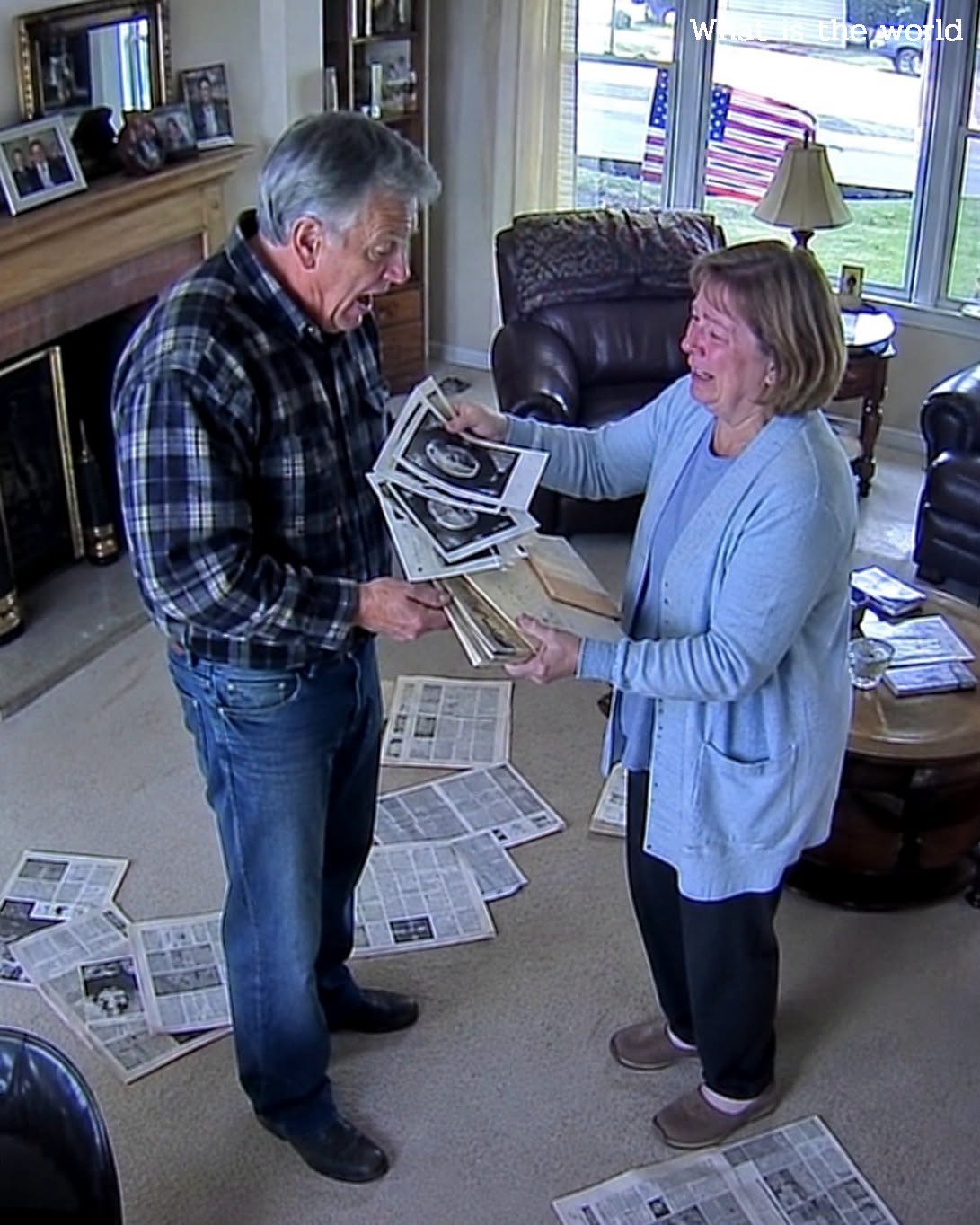
After my infidelity was exposed, my husband did not scream.
He did not throw dishes.
He did not pack a bag while calling me every name I already knew I deserved.
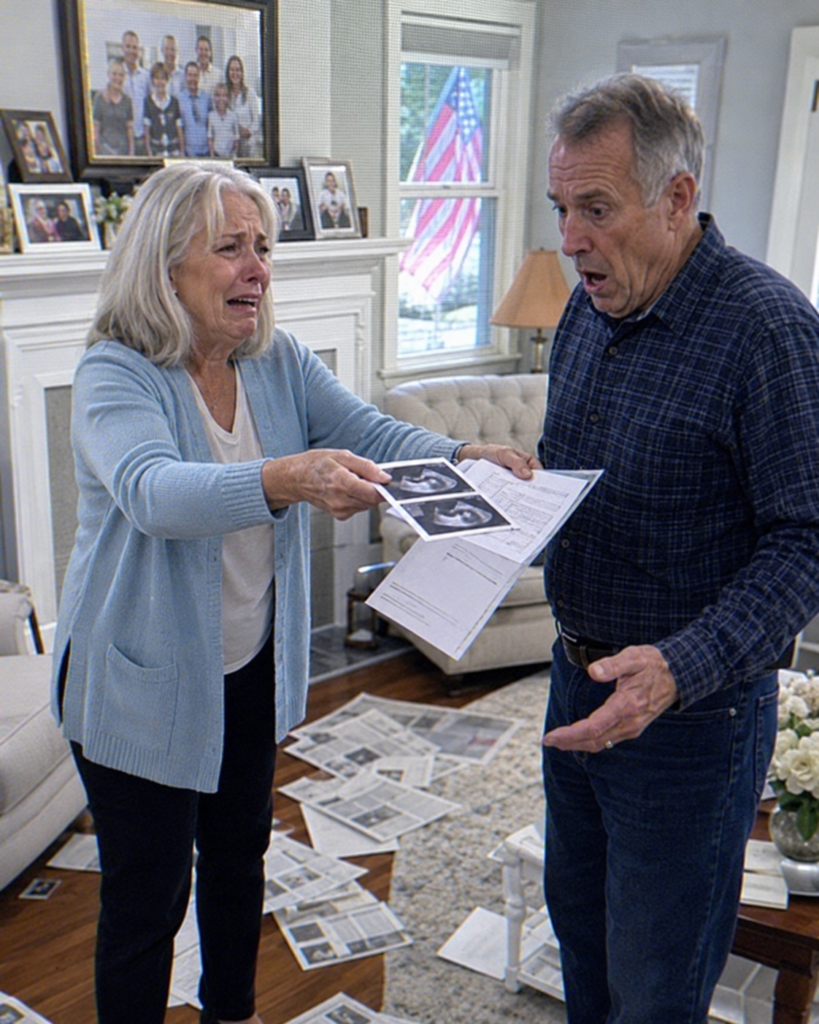
Michael simply stopped being my husband in every way that mattered.
He remained in the house.
He paid his share of the bills.
He changed the furnace filter when it needed changing and brought the trash cans back from the curb every Friday morning.
To anyone looking from the outside, we were still married.
Inside the house, we were two people serving the same sentence in separate rooms.
For eighteen years, I slept in the guest bedroom at the end of the hall.
The room always smelled faintly of laundry detergent, old paperbacks, and the lavender sachet I had tucked into the dresser drawer back when I still thought guests might visit.
Michael slept in the primary bedroom, the one we had painted soft gray together when Jake was seven.
He never asked me back.
I never asked to return.
I had betrayed him.
That was the sentence I used whenever the loneliness pressed too hard against my ribs.
I had betrayed him, so if he thanked me for dinner like I was a waitress at a quiet diner, I accepted it.
I had betrayed him, so if he stepped aside in the hallway to avoid brushing my shoulder, I accepted it.
I had betrayed him, so if birthdays, anniversaries, and Christmas mornings became careful performances around our son, I accepted that too.
The strangest thing about punishment is how quickly it becomes routine.
After enough years, you stop calling it cruel.
You call it normal.
By the time I retired, our house had become a museum of what we refused to say.
His recliner faced the television.
My sofa sat near the front window.
His mug stayed on the right side of the sink.
Mine stayed on the left.
There was a small American flag magnet on the refrigerator holding up the water bill, a reminder from one of Jake’s school fundraisers years ago.
There were family photos on the mantel, most of them taken at public events where smiling was expected.
In every one, Michael stood close enough to look like my husband but not close enough to touch me.
The affair had happened in 2008.
I could dress it up with explanations if I wanted to sound less ugly.
I was lonely.
Michael worked long hours.
Jake was growing older and needed me less.
I felt invisible.
None of that mattered.
I made a choice.
Then I lied about it.
When Michael found out, something in him went silent so completely that I spent years wishing he had shouted instead.
A shouting man gives you something to answer.
A silent man makes you answer yourself forever.
That spring, I fell into a depression so deep I can still remember the taste of it.
Metallic.
Dry.
Like pennies on the tongue.
I stopped eating full meals.
I stopped sleeping for more than an hour or two.
I moved through the house doing chores because chores gave me instructions when my own mind would not.
At 1:13 a.m. one night, after another evening of Michael speaking to me only about the electric bill, I swallowed too many sleeping pills.
I will not pretend it was noble.
It was not a plea for understanding.
It was not a dramatic gesture.
It was cowardice mixed with exhaustion and shame.
When I woke up, I was in a hospital bed.
My throat burned from the tube.
My stomach felt scraped raw.
My lower abdomen had a dull, deep ache that made me curl under the blanket.
Michael sat beside me, holding my hand.
That was what I remembered most.
His hand.
Warm.
Real.
The first touch in weeks.
“Don’t worry,” he said when I winced. “The pain is just from the stomach pumping.”
His voice was calm.
His thumb moved once over my knuckles.
I believed him because I wanted to believe he had chosen mercy.
I believed him because I had no right, in my own mind, to question anything.
When I came home, he moved me into the guest room.
He said I needed rest.
Then days became weeks.
Weeks became years.
The door between us never opened again.
Jake grew up inside that careful quiet.
He was old enough to sense the coldness but too young to name it.
He asked once, when he was in middle school, why Dad never sat beside me on the couch.
I told him marriage changes as people get older.
He looked at me in that direct way children do when they know an adult is lying badly.
Then he stopped asking.
That was one of the things I hated myself for most.
Not just the affair.
Not just the overdose.
The way my shame taught our son to walk softly in his own home.
After I retired, I finally scheduled the physical I had postponed for years.
The appointment was on a Tuesday morning.
The clinic smelled like hand sanitizer, paper masks, and burnt coffee from the waiting room machine.
A woman near the door coughed into her sleeve.
A television mounted high in the corner played a morning show nobody was watching.
I filled out the intake form with the careful handwriting of someone who has spent her life trying not to cause trouble.
Current medications.
Past surgeries.
Childbirth history.
Any unusual pain.
I checked the boxes quickly.
No surgeries.
One child.
Natural birth.
Dr. Evans came in with a tablet tucked under her arm and reading glasses pushed onto her head.
She was younger than me by maybe fifteen years, practical in the way good doctors often are.
She asked about my retirement.
She asked about sleep.
She asked whether I had been having discomfort.
I told her about the dull pressure I had been ignoring.
She ordered an ultrasound to be safe.
There was nothing frightening about it at first.
The exam room was cool.
The paper on the table crackled under my body.
The ultrasound gel was cold enough to make me flinch.
A machine hummed beside the wall.
Dr. Evans moved the probe and watched the monitor.
Then she stopped.
Her hand did not jerk.
Her face did not twist.
It simply changed.
The professional calm stayed in place, but something sharper appeared behind it.
She clicked back through the images.
Then she did it again.
“Susan,” she said, “I need to ask you something directly.”
I turned my head toward her.
“How has your intimate life been over the last eighteen years?”
Heat rushed into my face.
It was humiliating how fast old shame could find me.
I was in a medical exam room at sixty-something years old, and suddenly I felt like the woman Michael had caught in 2008.
“It hasn’t existed,” I said.
She waited.
“We haven’t slept in the same room since 2008.”
Dr. Evans glanced at the monitor again.
“Since 2008 exactly?”
“Yes.”
I stared at my hands.
“It was the price I paid for what I did.”
She did not ask what I meant.
For that, I was grateful.
Instead, she frowned.
“Then this does not make sense.”
Those six words hit harder than any accusation.
“What doesn’t?” I asked.
“I’m seeing significant calcified scarring on the uterine wall.”
I blinked at her.
She turned the monitor slightly, not as if she expected me to understand the image, but as if she wanted me to understand that she was not guessing.
“It looks like evidence of an invasive procedure,” she said. “Susan, are you absolutely sure you have no memory of surgery?”
“No.”
The answer came out too fast.
I tried again.
“No, I mean yes, I’m sure. I only had Jake. Natural birth. No C-section. No procedure.”
“Nothing in 2008?”
My mouth went dry.
At first there was only the blank wall of denial.
Then the hospital room came back.
The burning throat.
The white blanket.
Michael holding my hand.
The ache low in my abdomen.
The sentence I had accepted because I was too ashamed to question it.
The pain is just from the stomach pumping.
I sat up so quickly the paper under me tore.
Dr. Evans put a hand near my shoulder but did not touch me.
“I don’t want to frighten you,” she said.
Too late.
“I need my records,” I said.
“We can request what exists,” she replied. “But based on what I’m seeing, you should ask your husband what happened during that hospitalization.”
My laugh sounded wrong.
Small.
Empty.
“My husband has barely touched me in eighteen years.”
Dr. Evans looked me straight in the eye.
“The imaging does not lie.”
She printed a note.
She placed it in a plain folder.
She told me to take a breath before driving.
I nodded like I understood how to do that.
In the parking lot, I sat behind the wheel for almost ten minutes with the folder on my lap.
Cars pulled in and out.
A man in scrubs walked past carrying a paper coffee cup.
Somewhere nearby, a child laughed.
The whole world continued as if my past had not just split open.
I drove home anyway.
The road looked too bright.
The stoplights took too long.
At every red light, I saw Michael’s hand on mine in that hospital bed.
At every green light, I heard Dr. Evans.
The imaging does not lie.
When I pulled into the driveway, the little porch flag tapped against the siding in the breeze.
It was such an ordinary sound.
Soft cloth against painted wood.
Our mailbox leaned slightly because Michael kept saying he would fix it after the weather changed.
There were two grocery bags still in the back of my car from the morning, milk warming because I had forgotten them.
That was the kind of detail that breaks you sometimes.
Not the great betrayal.
The milk.
The mailbox.
The life still pretending to be normal.
Michael was in the living room with the newspaper open.
He had a way of reading that made him look carved from stone.
One ankle crossed over the other.
Glasses low on his nose.
Mug on the side table.
The television remote lined up neatly beside it.
“Susan?” he said when I walked in.
He sounded mildly surprised.
Not worried.
Not guilty.
Just surprised that I was home earlier than expected.
I stood between him and the front window with Dr. Evans’s folder in my hand.
For a moment, eighteen years moved through me at once.
Every dinner plate set down quietly.
Every closed bedroom door.
Every Christmas morning where Jake opened gifts while Michael and I performed peace like bad actors.
Every time I told myself he had the right.
Every time I told myself I deserved less than tenderness.
“Michael,” I said.
He lowered the paper.
“What is it?”
“For eighteen years, I have lived in torment because of what I did to you.”
His face tightened.
It was a tiny movement, but I saw it.
“I accepted it,” I continued. “I accepted the separate rooms. The silence. The way you treated me like a guest you were too polite to throw out.”
He folded the newspaper once.
Not fully.
Just enough to make a crease.
“Susan, what happened at the doctor?”
That was when I knew.
He had not asked if I was okay.
He had asked what happened.
A man who has nothing to hide asks about your fear.
A man with a buried secret asks how much you know.
I held up the folder.
“Dr. Evans found scarring.”
His eyes moved to the folder.
“Uterine scarring,” I said. “Evidence of a procedure.”
The room went still.
The refrigerator hummed from the kitchen.
The porch flag tapped again behind me.
A newspaper page softened and shifted over his knee.
“I told her that was impossible,” I said. “I told her I had never had surgery. I told her the only time I was unconscious long enough for anyone to do anything to my body was in 2008.”
Michael did not blink.
“In that hospital,” I said, and my voice broke, “when I was unconscious, what did you do to me?”
The newspaper slipped.
He caught one corner, then lost it.
The pages fell open across the hardwood floor.
For the first time in eighteen years, Michael looked afraid of me.
Not angry.
Not disappointed.
Afraid.
“What kind of surgery was it?” I asked.
He stood slowly.
“Answer me.”
He turned toward the mantel and placed both hands on it.
His shoulders rose once.
Then again.
At first I thought he was crying.
Then I realized he was trying not to speak.
“Michael.”
He bowed his head.
“Tell me what happened.”
When he finally opened his mouth, he did not apologize.
He said our son’s name.
“Jake.”
The word made no sense.
For a moment I thought he was trying to distract me.
Then I thought he meant Jake had known something.
Then I thought of the hospital room again and felt my knees weaken.
“Don’t use Jake to hide from me,” I said.
Michael shook his head.
“I thought I was saving him.”
That sentence changed the air in the room.
I could feel it.
Every object became too sharp.
The mug.
The remote.
The newspaper.
The family photo on the mantel where Jake stood between us at high school graduation, smiling hard enough for all three of us.
“What did you save him from?” I asked.
Michael’s mouth trembled.
“From losing his mother again.”
I stared at him.
“I didn’t understand what they were asking me to sign,” he said.
“Who asked you?”
He pressed his lips together.
“Michael.”
He turned then, and whatever I had expected to see on his face, it was not that.
He looked ruined.
Not innocent.
Ruined.
“The doctor on call said you were unstable,” he whispered. “He said another pregnancy could be dangerous if you tried something again. He said you were not in any condition to make decisions.”
My body went cold from the inside out.
“What decision?”
He did not answer.
I walked to the TV cabinet.
I do not know why I knew where to look.
Maybe because after eighteen years in the same house, you learn the geography of another person’s secrets.
Michael kept old records in the bottom drawer.
Tax returns.
Homeowners insurance.
Warranty papers.
Hospital bills he had insisted on handling alone because I was too fragile, too ashamed, too grateful to argue.
I opened the drawer.
“Susan, don’t.”
The words came too late.
Behind the insurance folder was a thin yellow envelope.
My name was written on it in Michael’s handwriting.
2008 — Hospital.
I lifted it out.
The paper was brittle at the corners.
Michael sat down hard in the recliner, as if his bones had finally given up.
Inside the envelope was a discharge summary, a consent form, and a copy of a surgical note with medical language I could barely force my eyes to follow.
The timestamp was 3:42 a.m.
The date matched the night after my overdose.
The consent line was not signed by me.
I looked at the name beside it.
Michael’s.
The room tilted.
I read the procedure twice before the meaning landed.
I will not dress it up.
I will not soften it because it happened in a hospital under fluorescent lights with forms and signatures and professional language.
While I was unconscious, Michael authorized a procedure that changed my body forever.
He had let me spend eighteen years believing the only thing he took from me was affection.
He had taken more.
I pressed one hand to my lower abdomen, not because it hurt in that moment, but because my body suddenly felt like a house I had lived in without knowing someone else had locked one of the rooms.
“You signed this,” I said.
Michael covered his face.
“You signed for them to do this.”
“I thought I was protecting you.”
“No.”
My voice sounded calm now, which scared me more than screaming.
“You were punishing me.”
He dropped his hands.
“That isn’t true.”
“You let me wake up in pain and told me it was from stomach pumping.”
“I was trying to keep you alive.”
“You kept me obedient.”
That was the sentence that finally broke him.
He folded forward, elbows on his knees, and sobbed into his hands.
For years, I had imagined Michael’s silence as discipline.
Then as restraint.
Then as the last dignity of a man I had wounded.
I had never imagined it was also cover.
The next hour moved strangely.
I took photos of every page with my phone.
I placed the original documents back on the coffee table, not in the envelope.
I called Dr. Evans’s office and asked them to request every record connected to the 2008 hospitalization.
My hands shook so badly I had to repeat my date of birth twice.
The receptionist’s voice softened when she heard me crying.
Michael kept saying my name.
I stopped answering.
At 1:06 p.m., Jake called.
I almost did not pick up.
Then I saw my son’s name on the screen and understood that whatever Michael had done, my shame had already cost Jake enough truth.
“Mom?” he said.
His voice was cheerful at first.
Adult.
Busy.
He was married now, with a job and a mortgage and a laugh that still sounded like the boy who used to run through the sprinkler in our backyard.
Then he heard me breathe.
“What happened?”
I looked at Michael.
He shook his head once, begging without words.
For eighteen years, begging had been my job.
Not anymore.
“I need you to come over,” I said.
Jake arrived twenty-three minutes later.
He came through the front door without knocking, like he still belonged to the house in ways neither of us had protected.
He found me at the dining table with the folder open.
He found his father standing by the kitchen sink, white-faced and silent.
“What is going on?” Jake asked.
I could have protected Michael then.
A younger version of me might have.
The woman who had spent eighteen years sleeping under punishment might have swallowed the truth to preserve the shape of the family for one more day.
But that woman had died somewhere between Dr. Evans’s ultrasound monitor and the yellow envelope.
I slid the consent form toward my son.
Jake read the top line.
Then he read the signature.
His face changed in stages.
Confusion.
Recognition.
Horror.
“Dad,” he said.
Michael gripped the edge of the counter.
“You told me Mom didn’t want more kids,” Jake whispered.
My head snapped toward Michael.
That was a new wound.
A fresh one.
“What?” I said.
Jake looked at me with tears in his eyes.
“When I asked why I was an only child,” he said. “When I was twelve. He said you couldn’t handle being a mother again. He said I should be grateful you stayed for me at all.”
The room blurred.
Michael said, “I was trying to explain something complicated to a child.”
Jake slammed the paper onto the table.
“No. You made me think she regretted me.”
That sentence did what mine had not.
It made Michael sit down.
He lowered himself into the chair slowly, as if the air had become too heavy to stand in.
I looked at my son and saw all the years we had lost to a story Michael told because it was easier than the truth.
I had thought my punishment lived only in my bedroom, in my marriage, in the quiet spaces between two adults.
But punishment spreads.
It teaches children where love is dangerous.
Jake sat beside me.
For the first time since he was a little boy, he reached for my hand at the table.
I broke then.
Not loudly.
Not dramatically.
I folded over his hand and cried in a way I had not allowed myself to cry in nearly two decades.
Michael tried to speak several times.
Jake did not let him.
“No,” he said. “Not until she finishes.”
So I finished.
I told Jake about the physical.
I told him what Dr. Evans found.
I told him about the ache in the hospital bed and the lie about stomach pumping.
I told him about the separate rooms and the way I had accepted every cold word because I thought I had earned nothing better.
Jake listened without looking away.
When I was done, he took the documents and placed them back in order, page by page.
Then he said, “We’re making copies.”
That was my son.
Not loud.
Not theatrical.
Practical when the room was burning.
By 3:15 p.m., we had scanned the documents.
By 4:10 p.m., Jake had called a patient advocate line and asked what steps existed for obtaining full medical records from an old hospitalization.
By 5:02 p.m., Dr. Evans had called back herself.
She could not tell me what had happened without records.
She could not undo anything.
But she said, very gently, that I had the right to request every page.
She also said I had the right to ask questions that should have been answered eighteen years ago.
Michael sat in the living room while we did all this.
Once, I heard him crying.
Once, I heard him say, “I loved you.”
I did not answer.
Love that requires silence from the person harmed is not love.
It is ownership wearing a softer shirt.
The records took weeks.
During that time, I moved into Jake’s guest room.
I took my clothes, my medications, my wedding album, and the small wooden box where I kept birthday cards from my son.
I left the guest room quilt behind.
It had belonged to the punishment.
I did not.
Michael called every day for the first week.
Then every other day.
Then he stopped and began leaving voicemails instead.
Some were apologies.
Some were explanations.
Some were versions of the same old sentence.
I thought I was protecting you.
The full medical file arrived in a thick envelope.
Dr. Evans sat with me while I read it.
Jake sat on my other side.
There were intake notes.
There were medication records.
There was a psychiatric evaluation.
There was the surgical consent form.
There were words I wish I had never had to learn about my own body from a file instead of a doctor speaking to me while I was awake.
The record showed that I had been deemed temporarily unable to consent.
It also showed that the procedure had been described as medically advisable under the circumstances.
But there, in the notes, was a line from Michael.
Spouse states patient would not want another pregnancy and family cannot survive another crisis.
I read that line until the words stopped looking like words.
Family cannot survive another crisis.
He had called me a crisis.
He had turned my body into the place where his fear and anger could make a permanent decision.
Dr. Evans did not dramatize it.
She did not tell me what to feel.
She placed a box of tissues between us and said, “Susan, whatever anyone believed at the time, you deserved to know what happened to your body.”
That was the first clean sentence I had heard in eighteen years.
You deserved to know.
I filed complaints where complaints could still be filed.
Some doors were closed by time.
Some records were incomplete.
Some people had retired.
That is one of the cruelties of old harm.
It does not wait neatly for justice.
But the truth still mattered.
The truth changed what I believed about my life.
It changed what Jake believed about his childhood.
It changed the way Michael’s silence looked when held up to light.

A few months later, I met Michael in a family counselor’s office because Jake asked for one conversation with all three of us present.
The room had beige walls, a box of tissues, and a framed map of the United States near the bookshelf.
Ordinary things.
A room built for people trying to say unbearable sentences without destroying each other completely.
Michael looked smaller than I remembered.
He had lost weight.
His shirt hung loose at the collar.
When he saw me, he stood.
I did not hug him.
Jake sat between us.
For a long time, nobody spoke.
Then Michael said, “I was angry.”
It was the first honest thing he had said.
He cried after that.
Not the collapsing performance from the living room.
A quieter kind.
He said he had been terrified after the overdose.
He said he had hated me for the affair and hated himself for still loving me.
He said when the doctor spoke about future risk, he heard only one thing.
A way to make sure there would never be another child, another pregnancy, another chance for our family to break in the same way again.
“I told myself it was protection,” he said. “But part of me wanted control.”
Jake looked at the floor.
I watched my son’s hands curl into fists.
I did not comfort Michael.
That would have been another old habit.
Instead, I said, “You let me think your coldness was the whole punishment.”
Michael nodded.
“You let me build my life around guilt while you hid what you had done.”
“Yes.”
“You let our son believe I was less of a mother than I was.”
His face crumpled.
“Yes.”
That was all I needed from him in that room.
Not forgiveness.
Not reconciliation.
A confession spoken while Jake was there to hear it.
I did not go back to the house.
Eventually, the legal and financial pieces were handled in the ordinary way such things are handled.
Forms.
Meetings.
Signatures.
A county clerk window.
An attorney’s office with stale coffee and a printer that jammed twice.
There was no grand movie ending.
No judge slammed a gavel and gave me back eighteen years.
No apology rebuilt the rooms I had slept in alone.
But I moved into a small apartment with morning light in the kitchen.
Jake helped me carry boxes.
He put my coffee mugs in the cabinet and fixed the wobbly leg on my dining chair.
On my first night there, he brought takeout and sat on the floor because the table was still covered in unpacked mail.
We ate noodles from paper containers and talked about nothing important for almost an hour.
Before he left, he hugged me in the doorway.
“I’m sorry I didn’t know,” he said.
I held him tighter.
“You were a child.”
“So were you, kind of,” he said quietly. “When it happened. You were broken, and he made decisions around the broken part.”
I cried after he left.
Then I washed my face, made tea, and slept in my own bed.
Not a guest room.
Not a punishment room.
Mine.
Sometimes people ask whether I forgave Michael.
I do not have a neat answer.
I know what I did in 2008 was wrong.
I know my betrayal hurt him deeply.
I also know his pain did not give him ownership of my body, my records, my future, or our son’s understanding of his mother.
Two things can be true without canceling each other out.
I was guilty.
I was also wronged.
For eighteen years, I thought I was paying for the affair.
I thought the separate rooms, the polite distance, the cold dinners, and the careful silence were the full cost of what I had done.
I did not know there was another price hidden in a yellow envelope.
I did not know a doctor’s question after retirement would open the drawer I had been too ashamed to touch.
But it did.
And once it opened, I finally understood something I wish I had known sooner.
A person can take responsibility for her sin without surrendering the right to the truth.
A person can be sorry and still be allowed to be safe.
A person can say, “I was wrong,” without accepting a lifetime of being erased.
For eighteen years, Michael and I lived like strangers in the same house.
Now, when I wake up alone, it feels different.
The quiet is no longer his punishment.
It is mine to fill.