
Part 1: The Morning After He Abandoned Me
At 7:16 the next morning, my phone vibrated against the nightstand.
I had barely slept. Every breath made my fractured ribs ache, my broken leg felt as if it had been filled with hot cement, and my four-year-old daughter, Sophie, was curled beside me with one small hand wrapped around my hospital bracelet.
The notification came from our security system.
Someone is at the front door.
I opened the camera feed and stared in disbelief.
My husband, David, stood on the porch wearing the same navy sweater he had left in the night before. His hair was disheveled, his face pale. Beside him was his mother, Eleanor, still dressed like she was on her way to a country club luncheon.
Only now, neither of them looked smug.
David pulled on the front-door handle.
Once.
Twice.
Then harder.
When it didn’t open, Eleanor stepped forward and began hammering her fist against the door.
“Claire!” she shouted. “Open this door immediately!”
Sophie stirred beside me.
I turned down the volume, but not before my daughter heard her grandmother’s voice.
“Is Daddy back?” she whispered.
I looked at her sleepy face and felt something inside me harden.
Less than twelve hours earlier, David had watched his mother pack his clothes into expensive suitcases while I lay helpless in bed. He had kissed my forehead, told me my injuries were “too stressful,” and walked out on both of us.
Now he was back.
Not because he regretted leaving.
Not because Sophie had cried herself to sleep asking for him.
Not because I needed help getting to the bathroom or remembering my medication.
He was back because I had finally stopped making his life comfortable.
Eleanor leaned toward the security camera, her eyes blazing.
“How dare you do this to us?” she shouted.
I pressed the microphone button.
My voice was weak, but my words were steady.
“You told me David would come back when I was functional.”
Both of them froze.
“Well,” I continued, “I became functional faster than you expected.”
Part 2: Before Everything Broke
Before the crash, I believed David and I had a solid marriage.
Not perfect, but solid.
We had met eight years earlier at a charity event in Columbus, Ohio. I was helping organize the fundraiser through my small branding company, and David was there representing a commercial real estate firm.
He was charming without seeming arrogant. He listened when I spoke. He remembered small details. On our third date, he brought me the cinnamon tea I had mentioned liking once in passing.
When Sophie was born, he cried harder than I did.
For years, he played the role of devoted husband beautifully.
He packed Sophie’s lunches, took photographs at every preschool event, and told anyone who would listen that his family was his greatest achievement.
Looking back, I realized David loved being seen as a good husband and father.
Actually doing the difficult parts was another matter.
He enjoyed bedtime stories, birthday parties, and smiling family photographs. But when Sophie had the flu, he suddenly had urgent work. When my company faced a crisis, he complained that I was distracted. When anything became inconvenient, he disappeared behind the words, “I can’t handle this right now.”
I had always compensated.
I rearranged my schedule.
I solved the problems.
I made excuses for him.
And because I handled everything so quietly, David began believing everything happened effortlessly.
The house was one example.
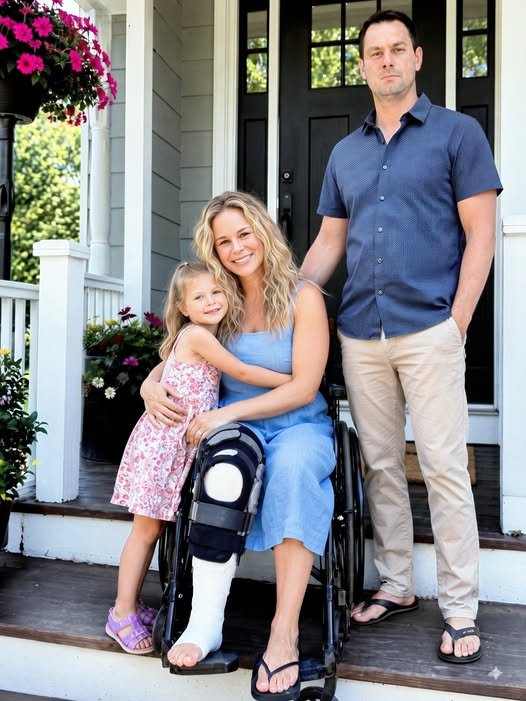
My grandmother had left it to me before David and I married. It was a beautiful two-story home in a quiet neighborhood outside Columbus, with white siding, a deep porch, and a maple tree Sophie loved to climb around.
The deed remained solely in my name, as my grandmother’s will required.
David knew that.
Eleanor apparently did not.
She loved telling people that her son had purchased a “lovely family home.” Whenever she visited, she criticized my furniture, my cooking, and the flowers I planted near the porch.
David never corrected her.
“It keeps the peace,” he would say.
What he meant was that correcting his mother might make his life uncomfortable.
So he allowed her to believe the house belonged to him.
He also allowed her to believe his lifestyle came from his important career.
In reality, David earned a respectable salary, but my company paid most of our major expenses. The family SUV was mine. The premium credit card he carried was connected to my business account, where he was an authorized user for household purchases. Even his expensive suits had been bought after I helped him prepare for a promotion.
I had never held any of that over him.
Marriage, I believed, was a partnership.
Then came the crash.

Part 3: “Your Family Will Need to Help You”
It happened on a rainy Tuesday afternoon.
I had picked Sophie up from preschool and was driving home when a truck ran a red light.
I remember the sound of twisting metal.
I remember Sophie screaming from the back seat.
Then everything went white.
When I woke up in the hospital, my first thought was of her.
“Sophie,” I gasped. “Where’s my daughter?”
A nurse placed a hand on my shoulder.
“She’s safe. She has a few bruises, but her car seat protected her.”
I started crying from relief.
The other driver had been drinking. He walked away with minor injuries. I left the hospital two days later with a broken leg, three fractured ribs, severe bruising, and strict instructions to remain in bed except when absolutely necessary.
The doctor looked directly at David.
“She cannot be left alone,” he said. “She’ll need help with medication, meals, bathing, and mobility. Someone will also need to care for your daughter.”
David nodded solemnly.
“Of course,” he said. “I’ve got them.”
He even squeezed my hand.
But during the drive home, he barely spoke.
That evening, I asked him to help me sit up so I could take my medication.
He sighed.
Not loudly.
Just loudly enough for me to hear.
When Sophie asked him to make macaroni and cheese, he snapped that he was busy, even though he was scrolling on his phone.
By the following morning, dirty dishes covered the counter. Sophie was still wearing yesterday’s clothes, and David had forgotten to give me my pain medication on schedule.
“I’m trying,” he said when I reminded him. “You don’t have to criticize everything.”
“I’m not criticizing you. I just can’t reach the pills.”
He dragged a hand down his face.
“This is overwhelming, Claire.”
“It’s been one day.”
“That doesn’t make it less overwhelming.”
An hour later, he called his mother.
I thought Eleanor was coming to help.
I should have known better.
Part 4: The Designer Suitcases
Eleanor arrived just after lunch.
She walked into the bedroom wearing a cream-colored coat and carrying two large designer suitcases.
For one hopeful second, I assumed she had brought clothes so she could stay with us.
Then she passed my bedroom without saying hello and walked into the closet.
I heard hangers sliding across the rail.
“David?” I called.
He appeared in the doorway but wouldn’t meet my eyes.
“What is she doing?”
He glanced toward the closet.
“Mom thinks I should stay with her for a few days.”
I stared at him.
“And who will stay with me?”
“We’ll arrange something.”
“Arrange what?”
“A nurse. A babysitter. I don’t know.”
“You haven’t arranged anything.”
“I said I don’t know, Claire!”
The sudden sharpness in his voice startled Sophie, who was sitting on the bedroom floor with her coloring book.
She looked up at him.
“Daddy, are you mad at Mommy?”
His expression softened immediately.
“No, sweetheart.”
Eleanor emerged from the closet carrying an armful of David’s shirts.
“This environment is not appropriate for him,” she announced.
I couldn’t believe what I was hearing.
“This environment?”
“My son is under tremendous pressure at work. He cannot spend his days fetching water, preparing meals, and dealing with tantrums.”
Sophie’s lower lip trembled.
“She isn’t having tantrums,” I said. “She’s four years old, and she was in a car accident.”
Eleanor dropped the shirts into the suitcase.
“Precisely. She is emotional, and you are incapacitated.”
“Then help us.”
Eleanor turned slowly.
“I have my own life.”
“So does David. It’s called being a husband and father.”
David flinched.
His mother did not.
She methodically folded another sweater, placed it in the suitcase, and zipped it shut.
“My son didn’t sign up to be a nursemaid,” she said coldly. “He has an important career. He’ll come back when you’re functional.”
For several seconds, nobody spoke.
Rain tapped softly against the bedroom window.
Sophie stood and ran to David.
“Daddy, don’t go.”
He lifted her briefly, kissed her cheek, and placed her back on the floor.
“It’s only for a few days.”
“Who will make breakfast?”
“Mommy will figure it out.”
I had never hated anyone more than I hated him in that moment.
Not because he was abandoning me.
Because he was teaching our daughter that love disappeared when someone became difficult to care for.
I grabbed his wrist as he leaned over me.
“David, please,” I whispered. “I can barely stand. Sophie needs you. I need you.”
For a moment, I thought he might change his mind.
Instead, he kissed my forehead.
“Sorry, babe,” he whispered. “It’s just too stressful right now.”
Then he walked out.
Eleanor followed with the suitcases.
A few seconds later, the front door closed.
Sophie climbed carefully onto the bed.
“Is Daddy coming back when you can walk?”
I pulled her against me despite the pain in my ribs.
That question broke the last piece of loyalty I still had toward him.
“No, sweetheart,” I whispered. “Daddy made a choice.”
Then I reached for my phone.
It was time for me to make one too.

Part 5: The Calls They Never Expected
My first call was to my older sister, Natalie.
She answered on the second ring.
“Claire? Are you okay?”
I tried to speak, but the moment I heard her voice, I started crying.
Twenty minutes later, she was driving toward my house from Cincinnati. She also contacted my best friend, Mia, who lived ten minutes away.
Mia arrived before I had even finished explaining what happened.
She took one look at Sophie, one look at me, and said, “I’m staying until Natalie gets here.”
Then she made dinner, organized my medicine, helped Sophie change into clean pajamas, and called her husband to bring over a portable bed.
The kindness was almost painful.
Two people with jobs, families, and responsibilities had reorganized their lives in minutes.
My husband had not lasted twenty-four hours.
My second call was to Rachel Coleman, a family attorney who had handled my grandmother’s estate.
I told her everything.
I expected her to advise me to wait until I was stronger.
She didn’t.
“Claire,” she said, “you do not need to make every decision tonight. But you do need to protect yourself.”
The house was legally mine. I had the right to revoke David’s electronic access, especially after he voluntarily left while I was medically vulnerable.
Rachel advised me to preserve the security footage and all messages. She also reminded me that the credit card David used was not joint property. It was my company’s business account, and he was merely an authorized user.
I opened the banking app.
His card showed three purchases since leaving the house.
Gas.
A steakhouse.
And a luxury hotel suite downtown.
He had told Sophie he was staying at his mother’s house.
Apparently, caring for his injured wife was too stressful, but ordering room service with his mother was manageable.
I removed him as an authorized user.
Then I contacted the vehicle service connected to my SUV. David had taken it without asking, leaving the keys to his older sedan in the garage. Because the SUV was titled and insured solely in my name, I had its access code disabled and arranged for it to be collected from the hotel parking lot.
Finally, Mia changed the smart-lock code, the garage code, and the security permissions from her phone while I watched from bed.
It took less than an hour.
For years, David had mistaken my generosity for dependence.
He was about to discover the difference.
Part 6: “How Dare You Do This to Us?”
At 6:40 the next morning, David’s card was declined when he attempted to pay for the hotel room.
At 6:52, he discovered the SUV was gone.
At 7:16, he and Eleanor arrived at my house in a taxi.
David pulled on the locked door.
Eleanor pounded hard enough to shake the camera.
“How dare you do this to us?” she yelled.
I activated the microphone.
“What exactly did I do?”
“You stranded us!” David shouted. “My card doesn’t work, and the car was taken!”
“My company card doesn’t work,” I corrected. “And my vehicle was collected.”
“We’re married!”
“You seemed to forget that yesterday.”
His face changed.
“Claire, open the door. We need to talk.”
“We talked yesterday. I begged you not to abandon me and Sophie. You left anyway.”
“I needed one night to clear my head.”
“You packed half your closet.”
“That was Mom’s idea.”
Eleanor stepped closer to the camera.
“You are being vindictive because my son refused to sacrifice his career.”
“He took today off to stay in a hotel with you.”
Her mouth tightened.
“That is beside the point.”
“No, Eleanor. That is exactly the point.”
Natalie entered the bedroom holding a mug of tea. She could hear them through the phone.
“Want me to call the police?” she asked.
Her voice carried through the microphone.
Eleanor’s face turned pale.
David looked over his shoulder, then back at the camera.
“Is your sister in my house?”
“It isn’t your house.”
Silence.
Even through the small screen, I watched the realization spread across Eleanor’s face.
“What do you mean?” she demanded.
“The house belonged to my grandmother. It was left to me before David and I married. The deed is solely in my name.”
Eleanor looked at her son.
“You told me you bought this house.”
David said nothing.
I continued.
“The credit card was mine. The SUV was mine. And since David decided he wasn’t responsible for his wife or daughter, I decided I wasn’t responsible for financing his escape.”
“Claire,” David said more quietly, “you’re overreacting.”
“No. I spent years underreacting.”
Sophie appeared in the hallway wearing her pink pajamas.
“Is Daddy outside?”
Natalie lifted her before she could come closer.
David heard her voice.
“Sophie!” he called through the door. “Daddy loves you!”
My daughter looked at the security screen.
“Then why did you leave?”
David’s face collapsed.
He opened his mouth, but no answer came.
After a moment, I spoke.
“You need to go, David. Rachel Coleman will contact you today.”
“Rachel Coleman?”
“My attorney.”
Eleanor gasped.
“You would destroy your family over one difficult evening?”
I looked at her through the camera.
“No. David destroyed it when he decided our vows only applied while I was healthy and convenient.”
Then I ended the connection.
They remained on the porch for another ten minutes.
Eventually, the taxi returned.
This time, they had to pay for it themselves.

Part 7: The Truth Behind His Apology
David began sending messages before he had even left the neighborhood.
At first, he apologized.
Then he blamed his mother.
Then he blamed stress.
Then he blamed me for making a permanent decision while taking pain medication.
When none of that worked, he became angry.
You embarrassed me.
You made my mother look like a criminal.
You can’t keep my daughter from me.
I never threatened to keep Sophie from him.
I wanted her to have a relationship with her father.
But I also wanted that relationship to be safe, stable, and based on actions rather than dramatic promises shouted through a locked door.
Rachel arranged temporary custody guidelines while I recovered. David could visit Sophie, but because I was unable to transport her and he had voluntarily left us without care, the first visits were supervised at the house with Natalie present.
He hated that.
Not because it prevented him from seeing Sophie.
Because it damaged the image he had of himself.
During his first visit, he arrived carrying flowers, balloons, and a giant stuffed bear.
Sophie thanked him politely.
Then she asked, “Are you staying to help Mommy?”
David glanced at me.
“I came to see you, sweetheart.”
“But Mommy still can’t walk.”
His smile faded.
Children have a way of finding the truth adults spend hours avoiding.
After Sophie went to play, David sat across from my bed.
“I made a mistake,” he said.
“You made a choice.”
“I panicked.”
“So did I when a truck hit our car. I still made sure Sophie was safe.”
He looked down.
“I’m not good with medical things.”
“You weren’t asked to perform surgery. You were asked to bring me water, remember my medicine, and care for your child.”
“I could learn.”
“You could have learned that night.”
His eyes filled with tears.
For years, those tears would have softened me.
This time, I understood that regret was not the same as change.
“Do you still love me?” he asked.
I considered the question carefully.
“I love who I thought you were.”
He covered his face with both hands.
That was the last time he asked me to take him back.
Part 8: Becoming Functional
Recovery took nearly four months.
Natalie stayed for three weeks. Mia organized a schedule among friends and neighbors. People brought casseroles, drove Sophie to preschool, carried laundry upstairs, and sat with me during the long afternoons when every movement hurt.
I learned something important during those weeks.
Needing help did not make me weak.
The wrong people had simply taught me to feel ashamed of having needs.
David had treated care as a burden because he believed love was something he should receive, not something he was expected to practice.
My friends showed me the opposite.
Real love did not make speeches.
It showed up with groceries.
It set alarms for medication.
It washed a child’s hair.
It sat beside a bed at two in the morning without complaining that the chair was uncomfortable.
The divorce was finalized the following spring.
David received fair parenting time, and I never spoke badly about him to Sophie. He struggled at first, but over time, he began learning how to care for her without someone quietly doing the difficult parts for him.
Eleanor refused to speak to me after learning the house was never David’s.
That was one loss I managed to survive.
The final time I saw her was outside the courthouse.
She looked at my cane and said, “You destroyed my son’s life because he had one weak moment.”
I smiled.
“No, Eleanor. You taught him that weakness excused cruelty. I simply stopped accepting the lesson.”
Then I walked away.
Slowly, but without assistance.
A year after the crash, Sophie and I planted flowers beneath the maple tree.
She chose yellow ones because she said they looked happy.
As we pressed the soil around the roots, she asked, “Mommy, are you functional now?”
The word made me pause.
I remembered Eleanor standing beside those suitcases, deciding my worth according to how much inconvenience I caused her son.
I looked at my daughter.
“I was always functional,” I told her. “I just needed time to heal.”
She seemed satisfied with that answer.
Then she placed her small hand in mine and led me toward the porch.
For years, I believed a rock-solid marriage meant nothing could break it.
I was wrong.
Sometimes a marriage breaks because it was never made of rock. It was made of appearances, excuses, and one person carrying more weight than the other.
The crash broke my leg and fractured my ribs.
But David’s abandonment broke the illusion I had lived inside for years.
And once that illusion was gone, I could finally see the truth.
I had not lost the man who would stand beside me through anything.
That man had never existed.
What I gained was far more valuable.
A safe home.
A daughter who would grow up knowing that love requires action.
And the certainty that I would never again beg someone to stay after they had already shown me how easily they could leave.