
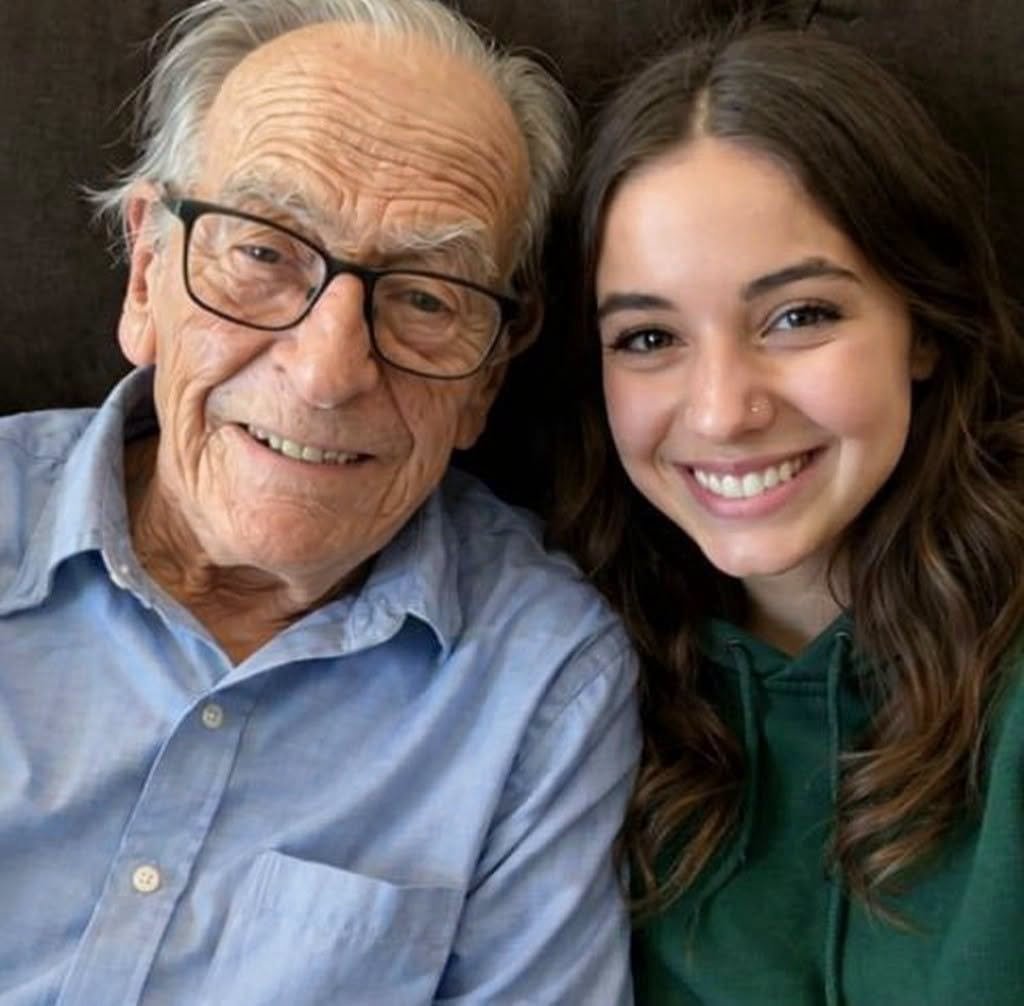
The blue-lined notebook on the kitchen table had a grease spot on the cover that looked like a thumbprint. My grandfather sat across from me, his knuckles swollen from the damp morning air, slowly counting out five nickels and three dimes.
“That is exactly ninety cents, Winslow,” he said, clearing his throat twice.
He always did that before he spoke of money, a dry, double rasp that made me look down at my shoes. I twisted the plain silver ring on my left thumb, keeping my hand under the edge of the oilcloth table so he wouldn’t see it spinning.
“The roll at the bakery went up to ninety-five,” I said, my voice dropping to a whisper at the end.
Bram did not look up from the small pile of coins. He slid them toward me with one thick finger, his fingernail yellowed and cracked from years of yard work.
“We have to keep our heads down, Winslow,” he said.
I took the cold coins and slipped them into my cardigan pocket, hating the sound they made against each other. I hated the smell of the burnt toast that lingered in the kitchen, and the way the linoleum was worn down to the gray backing in front of the sink.
Most of all, I hated myself for wishing he would just once reach into his pocket and pull out a green dollar bill without counting the pennies first. The girls at school had bright yellow raincoats and brand-new folders with plastic zippers, while I carried my lunch in a used bread bag.
“I will be home by four,” I said.
He did not answer, only nodded once and reached for his mug of weak black tea.
That was the last October we had together, before the cold weather set in and his chest grew too heavy for the stairs.
Now, three weeks after his funeral, the house was silent except for the steam radiator clanking in the corner of the kitchen. The blue-lined notebook still sat on the counter, its pages curling in the damp air that seeped through the kitchen window.
I had exactly two dollars left in my vinyl purse, just enough for a one-way bus ticket to the brick bank branch on Main Street.
The wind off the river was sharp as I stepped off the bus, carrying my wool coat tight around my shoulders. The town of Oakhaven seemed smaller under the gray winter sky, the storefronts boarded up with cheap plywood and old flyers.
Inside the bank, the air smelled of old paper and the wet floor mats by the door.
Evelyn, the senior loan officer, sat behind a low mahogany desk with a brass nameplate that needed polishing. Her gray hair was pulled back in a tight knot, and she wore a dark blue suit that looked older than I was.
“Sit down, Winslow,” she said, her voice carrying a precise, clipped professional cadence.
I sat in the leather chair opposite her, my knees pressed together, my fingers twisting the silver ring on my thumb.
“I came about the October notice,” I whispered.
Evelyn adjusted her silver-rimmed glasses, her fingers tapping the edge of a thick manila folder on her desk.
“It is not just October, Winslow,” she said. “The September payment never cleared either. The estate account is two months behind.”
“Bram always paid on the first,” I said. “He kept every receipt in a coffee can.”
“The bank has not received a payment since August,” she said.
She opened the folder, revealing a stack of documents with blue bank stamps on the margins. I could see Bram’s signature at the bottom of the front page, his handwriting shaky and small.
“If the balance is not brought current by the first Monday of December, the bank will proceed with the foreclosure,” she said.
The words felt heavy in the quiet room. The first Monday of December was less than five weeks away.
“How much is it?” I whispered.
“Four hundred and twelve dollars,” she said.
She looked at me over the rims of her glasses, and for a second, her professional posture softened. She reached out and touched the edge of the folder, then quickly drew her hand back.
“I can grant a two-week extension on the filing fee, but I cannot stop the interest from accumulating,” she said.
“Thank you,” I said.
“Is your uncle Roger helping you with the estate?” she asked.
“He said he would look at the papers,” I whispered.
“Tell him to call me,” she said, her voice returning to its clipped tone. “The bank needs a formal executor appointed before we can discuss any restructure.”
I stood up, my legs feeling strangely weak under my woolen skirt. The pink notice she gave me was folded twice and slipped into my pocket, resting against the three loose dimes.
The walk back to Elm Street took forty minutes because I didn’t have the fare for the return bus. By the time I reached the porch, my shoes were damp from the slush on the sidewalks.
Roger’s black sedan was parked in the driveway, its tailpipe still warm and dripping onto the gravel.
He was standing in our kitchen when I walked in, his heavy gold signet ring tapping against the hard surface of the kitchen counter. He had already opened the cupboard doors, looking at the cans of soup Bram had bought on sale.
“You should keep the lock on the front door clean, Winslow,” he said, turning around with a loud, overbearing familiarity. “An old house like this is an easy target for drifters.”
“I was at the bank,” I said, setting my purse on the table.
“I figured as much,” Roger said, tapping his ring again. “Evelyn called my office yesterday. She told me the old man let the mortgage slip.”
He walked over to the stove and lifted the lid of the kettle, finding it empty.
“I can help you with this, kiddo,” he said. “I really can. We’re family, after all.”
“The bank wants four hundred dollars,” I whispered.
“It is more than that,” Roger said, shaking his head. “There are back taxes from last winter, and the funeral home is asking for their balance. Bram didn’t leave you anything but a pile of bills.”
He reached into his breast pocket and pulled out a folded document.
“I have a friend who buys properties for cash,” he said. “We can transfer the deed to my name, pay off the bank before the auction, and get you a clean slate.”
“Bram wanted me to keep the house,” I said.
“Bram was seventy-seven and didn’t know what year it was,” Roger said, his voice rising slightly. “He lived like a beggar because he was broke, Winslow. He didn’t even have enough to buy you decent school clothes.”
I looked down at my worn cardigan, the cuff frayed where the wool had caught on a nail three years ago. The memory of the ninety-cent lunch money felt like a cold weight in my chest.
“I need to think about it,” I whispered.
“Don’t think too long,” Roger said, tapping his ring against the table one last time. “The bank doesn’t wait for people to make up their minds.”
He walked out of the kitchen, his heavy boots echoing down the hallway. The front door closed with a soft rattle that shook the glass pane in the kitchen window.
I sat in the dark kitchen for an hour, listening to the radiator clank. The cold blue light of the winter afternoon faded into black against the window panes.
I went up the narrow stairs to Bram’s bedroom, my hand sliding along the unpainted wood of the banister. The room was freezing, the air smelling of old paper and cedar shaving blocks.
I got down on my knees beside his narrow bed, the floorboards cold against my shins.
I reached my hand into the dark space beneath the box spring, searching through the dust. My fingers hit something hard, heavy, and metallic.
I dragged it out into the dim light from the hallway.
It was a small, rusty lockbox with a heavy brass latch. The metal was pitted with age, and a thick layer of dust coated the top.
I tried to slide the latch with my thumb, but it did not move.
I shook it gently, and something heavy and solid shifted inside with a dull clink.
I tried to wedge my silver thumb ring under the rusty corner of the lid, but the metal did not budge. The lock was solid, old, and completely sealed.
The cold brass of the lockbox would not budge.
I slid the heavy metal container back under the bed frame, pushing it deep into the shadow of the dust ruffle where the floorboards met the baseboard.
By seven the next morning, Uncle Roger was sitting at our laminate kitchen table with a grease-stained paper bag of cake donuts. He did not offer me one, though he kept his thumb hooked in the top of the bag while he chewed. The gold signet ring on his finger caught the dull yellow light from our overhead fixture.
“We need to find his bank books, Winslow,” Roger said, tapping the heavy gold ring twice against the table. “The funeral home isn’t going to wait forever on that second installment, and the utility bills are already stacking up by the microwave.”
“I haven’t seen any ledgers,” I said, twisting the plain silver ring on my left thumb. “Grandpa kept his papers in his head, mostly.”
Roger wiped a crumb from his chin with the back of his hand and leaned forward, his breathing heavy in the small kitchen. “Don’t play dumb with me, kiddo. A man doesn’t live seventy-seven years in this town without leaving a paper trail. Check his desk, check his closet. I want every scrap of paper with a bank logo on it by noon.”
“He didn’t have a desk,” I whispered.
“Then start tearing the closet apart,” Roger said, his voice rising just enough to make the radiator in the corner seem quieter. “I’ll be back after my shift at the lumber yard, and I expect to see a neat stack right here on this table.”
He stood up, leaving the half-empty bag of donuts behind, and walked out to his truck. The engine roared to life with a wet, sputtering cough that shook the kitchen windowpane.
I waited until the sound of his tailpipe faded down Elm Street before I walked into my grandfather’s bedroom. The air in there still smelled of his shaving soap and old wool sweaters.
The closet was small, containing only three flannel shirts, two pairs of work trousers, and a heavy winter coat that had lost most of its nap at the elbows. I knelt on the floor, pushing the shoes aside, and began to feel along the dark corners behind his spare boots.
My hand brushed against something soft and rectangular tucked deep inside the pocket of his heavy winter coat. I pulled it out and found a small blue velvet box, no larger than a deck of cards, secured with a tiny silver latch that had no keyhole.
Right behind the coat, wedged between the wall and a stack of old newspapers, was a blue cardboard ledger. The cover was faded to the color of a winter sky, and the spine was held together by yellowed masking tape.
I sat on the heels of my boots and flipped the ledger open, expecting to see columns of numbers detailing the ninety-cent bowls of oatmeal or the two-dollar bus tickets my grandfather recorded so meticulously. Instead, the first three pages were completely gone.
The paper near the binding had been neatly sliced out with a razor blade, leaving only a fraction of an inch of white fringe along the seam.
I tucked the blue velvet box into my cardigan pocket and carried the ledger to the kitchen table, where the light was stronger. Inside the back cover, a single piece of metal was taped to the cardboard. It was a silver locket, tarnished to a dull charcoal gray, with a delicate chain wrapped twice around its hinge.
I scraped the old tape away with my fingernail and lifted the locket. When I pried it open with my thumb, the tiny photograph inside showed my mother as a little girl, sitting on the hood of a red sedan that we had never owned.
The kitchen was cold, and the draft from the back door made the blue ledger pages flutter. I needed to know what my grandfather had been hiding, and the only person who could tell me about his accounts was at the brick bank on Main Street.
By three o’clock, the wind had picked up, carrying the scent of coal smoke from the railyard. I walked the four blocks to the bank, my hands shoved deep into my pockets, my fingers curled tightly around the blue velvet box.
Evelyn, the senior loan officer, was sitting behind her mahogany desk near the vault. She looked up as I approached, her silver-rimmed glasses sliding down her nose. She adjusted them with a quick, practiced tap of her index finger.
“Winslow,” she said, her voice dropping into that precise, professional cadence she used whenever we discussed the mortgage. “I was hoping you would call. We still haven’t received the authorization from the estate representative.”
“I found this in his closet,” I said, placing the blue velvet box on the green blotter between us. “I think it belongs to his accounts.”
Evelyn looked at the box, her fingers hovering over her calculator but never touching it. She did not pick the box up.
“I can’t help you open that, Winslow,” she said, looking toward the glass double doors of the lobby. “Without probate court documents naming an administrator, the bank cannot touch or verify any personal property found outside of a safety deposit box.”
“But it was in his coat,” I said, my voice dropping to a whisper. “Uncle Roger says we have to find his records today or they’ll turn off the heat.”
Evelyn adjusted her glasses again, her eyes softening for a brief second before she pulled her shoulders back. “Your uncle was here yesterday morning, Winslow. He was asking about your grandfather’s secondary accounts.”
“Yesterday?” I asked. “He told me he was at the yard all day.”
“He was here,” Evelyn said, her voice dropping lower. “He wanted to know if there was a secondary signature on the account ending in four seven nine. I told him the same thing I am telling you. We need court papers.”
I picked up the blue velvet box and put it back in my pocket, the velvet rough against my palm.
The walk back to Elm Street felt longer in the fading light. The blue light of the winter afternoon was settling over the gravel driveways, and the streetlights were flickering on, casting long, orange bars across the asphalt.
When I reached our porch, Harold was sitting on the wooden glider, his polished oak cane resting between his knees. He looked smaller under his heavy wool overcoat, his breath rising in thin white clouds.
“You’re late getting home, Winslow,” Harold said, his slow, raspy drawl warming the chilly air. He leaned heavily on his brass-handled cane as he stood up to greet me.
“I went to the bank,” I said, sitting on the step below him. “Uncle Roger is asking for the ledgers. He says we need to pay the funeral home.”
Harold spat into the dry hydrangea bushes beside the porch. “Roger hasn’t paid a bill in his life that didn’t have his own name at the top of it. Your grandfather knew that.”
“He wants to help,” I whispered, looking down at my worn sneakers.
“Bram was a stubborn man, Winslow,” Harold said, his hand tightening on the brass grip of his cane. “He didn’t trust Roger to clear his driveway, let alone handle his business. You keep those records put away until we see what the court says.”
“What did Roger want at the bank on Tuesday?” I asked.
Harold did not answer immediately. He stared down Elm Street toward the empty lot where the old canning factory used to stand, his jaw set hard.
“He’s looking for something your grandfather didn’t want him to find,” Harold said, turning his collar up against the rising wind. “Don’t sign anything he brings you, Winslow. Not a single sheet.”
He walked down the porch steps, his cane clicking against the concrete walkway with a rhythmic, heavy thud.
Inside the dark house, the kitchen smelled of old grease and cold tea. I turned on the small stove burner to heat some water, the blue flame casting long shadows across the linoleum.
The blue ledger sat on the table where I had left it, its torn pages sticking up like tiny white teeth.
Evelyn cleared her throat twice before pointing a manicured finger at the green-glowing monitor of her computer terminal. The screen cast a pale, sickly light over her pressed white collar and the delicate silver chain of her reading glasses.
“Your grandfather came into this branch on the second Tuesday of October,” she said, her voice dropping to a quiet, professional hum that barely carried over the low drone of the lobby heater.
I shifted on the hard leather chair, twisting the plain silver ring on my left thumb until the metal pinched my skin. “He didn’t tell me he was coming here. He told me he was going to the hardware store for some faucet washers.”
“He didn’t buy washers, Winslow,” Evelyn said, adjusting her silver-rimmed glasses with a swift, practiced movement of her middle finger. “He withdrew ten thousand dollars in cash, one-hundred-dollar bills only, and walked out the door with it in a brown paper bag. I counted it out for him myself.”
The bank lobby was quiet except for the low whir of the heating vent behind us and the occasional rustle of a deposit slip from the teller counter near the front windows.
“Ten thousand?” I whispered.
“Ten thousand,” Evelyn repeated, her precise, clipped cadence steady as a metronome. “That was three weeks before he passed, and he didn’t put a single penny of it back into the mortgage account to stop the foreclosure. He knew the house was two months behind.”
I looked at the small plastic sign on her desk that read Senior Loan Officer. It was slightly chipped on the corner, revealing the gray plastic beneath the faux-wood finish.
“Where would he put that much money?” I asked, my voice falling to a soft, hesitant whisper. “We didn’t even have enough for the heating oil last month.”
Evelyn leaned forward, resting her elbows on the polished mahogany desk. “That is what the estate needs to find out, and quickly, because the first Monday of December is coming fast, Winslow.”
The date sat between us like a physical weight, cold and immovable.
“I don’t have it,” I whispered.
“Well, somebody does,” Evelyn said, looking past my shoulder toward the heavy glass front doors of the lobby. “And if we don’t find a record of where it went, this bank will have no choice but to auction the house on Elm Street.”
She tapped her pen against the edge of her desk blotter, the sound sharp and rhythmic.
“Did he sign anything else?” I asked.
“Only the standard withdrawal receipt,” Evelyn said, her eyes softening for a fraction of a second before she pulled a fresh folder from her drawer. “But there was a man waiting for him in a blue sedan out front.”
I stood up, my knees slightly stiff, and thanked her before walking out into the chilly November air, the cold wind biting at my ears.
Roger’s heavy Buick was already idling at the curb when I reached the corner of Main and Third, the exhaust curling up in thick, white plumes against the gray brick of the hardware store.
He leaned across the passenger seat and threw the door open, the heavy gold signet ring on his finger tapping twice against the vinyl dashboard. “Get in, kiddo, it’s freezing out there. You’ll catch your death walking around in that light jacket.”
I slid into the warm cabin, the smell of cheap cigar smoke and peppermint gum instantly filling my nose, making my eyes water.
“I saw you coming out of the bank,” Roger said, pulling the car into the flow of traffic without looking at his mirrors. “You spending more time with Evelyn than with your own family these days.”
“I was just asking about the mortgage,” I said, keeping my hands deep in my coat pockets where he couldn’t see them twisting my silver ring.
“Let me handle the mortgage,” Roger said, his voice carrying that loud, overbearing familiarity that always made me want to shrink back into the seat. “In fact, I’ve got some paperwork right here in the glove box that will solve all our problems.”
He tapped the glove box lid with his gold ring, the sharp metallic click echoing in the small, warm space.
“What kind of paperwork?” I asked, my voice barely carrying over the hum of the heater.
“Just a standard power of attorney,” Roger said, steering the heavy car down the hill toward the railway tracks. “It gives me the authority to talk to the bank, handle Bram’s old debts, and stop them from taking the roof from over your head.”
He reached over and patted my knee, his hand heavy and warm through my jeans.
“I can handle it, Uncle Roger,” I said softly, my voice ending in a whisper. “Harold said he would look at the files for me.”
Roger’s face tightened, his jaw shifting as he stared straight ahead at the gray Indiana sky. He tapped his gold ring against the steering wheel three times.
“Harold is seventy-two years old and can barely walk to his mailbox without getting winded,” Roger said. “He doesn’t know how things are run now, Winslow, and some things are better left in the past, kiddo.”
“But Bram trusted him,” I said.
“Bram was an old man who lost his grip,” Roger said, pulling the Buick up to the curb in front of our small wood-frame house. “Sign the paper tonight, and I’ll take care of the rest of the bills tomorrow morning.”
He reached into the glove box, pulled out a folded white document, and pressed it into my hand.
I held the paper by its corner, the stiff edges catching the cold blue light coming through the windshield, noticing a faint smudge of dark ink near the signature line.
“I need to think about it,” I said.
“Don’t think too long,” Roger said, his smile returning but his eyes remaining perfectly still. “The bank doesn’t wait for teenage girls to make up their minds, and neither do the bill collectors.”
I got out of the car and watched him drive away, the exhaust lingering in the damp afternoon air like a fog.
Harold’s office on the second floor of the old insurance building smelled of dust, dry paper, and the wintergreen lozenges he kept in his vest pocket. A steam radiator in the corner clanked twice before settling into a low, steady hiss.
He leaned heavily on his polished oak cane, the brass handle catching the dim light of the desk lamp as he guided me toward a heavy metal machine in the back corner of the room.
“The county clerk keeps the old files on these microfilms,” Harold said, his slow, raspy drawl filling the quiet room. “I had to go down to the basement of the courthouse to find the rolls from twelve years ago, back when the accident happened.”
He clicked a switch, and the machine hummed to life, projecting a bright, blurry square of light onto the green glass screen.
“Is this about the accident?” I asked, watching him turn a black plastic wheel on the side of the viewer with his thick, wrinkled fingers.
“It is,” Harold said, his breathing heavy as he adjusted the focus of the lens. “The insurance company settled the claim back then, but the final court records were sealed because of your age.”
The screen flashed with columns of tiny, handwritten names and typed legal descriptions, the names of my parents appearing for a brief second before sliding off the top of the glass.
“Why would Bram seal them?” I asked, twisting my silver ring.
“To keep people from asking questions, I suspect,” Harold said, pausing the wheel on a page filled with dense legal jargon. “Look right here, Winslow.”
I leaned closer to the warm glass, my eyes straining to read the faded gray text that had been preserved in the celluloid.
“What does that number mean?” I asked, pointing to a line near the bottom of the page. “The one ending in four seven nine.”
“That is the initial filing for the trust account,” Harold said, his hand resting on the brass handle of his cane. “But the secondary ledger pages are missing from the county archives, too. Someone went through the physical books before they were photographed.”
I thought of the blue ledger in Bram’s closet with the neatly sliced edges where the pages used to be.
“Someone cut them out,” I said, my voice barely a whisper.
“Yes,” Harold said, turning the machine off and plunging the room back into the dim amber light of the desk lamp. “And we need to find out who did it before the first Monday of December.”
He walked me to the door, his cane clicking rhythmically against the worn wooden floorboards, his face looking older and more tired than I had ever seen it.
The house on Elm Street was cold when I got home, the air inside smelling of damp wool and old wood.
I sat at the kitchen table, the yellow light of the single bulb overhead casting long shadows across the faded linoleum.
The folded power of attorney from Roger sat next to my empty bowl of oatmeal, the white paper looking stark and clean against the worn wood.
I turned Bram’s silver ring around my thumb, listening to the silence of the empty rooms, wishing I could hear his deep voice clearing his throat twice before he spoke of money.
Then, from directly beneath my feet, came the sharp scrape of metal against stone.
I froze, my breath held tight in my chest, my hands clamping down on the edge of the table.
Another scrape followed, louder this time, coming from the old coal cellar beneath the kitchen.
The cellar door on the back porch was supposed to be locked from the inside with a heavy iron latch.
I stood up slowly, making no sound on the old floorboards, and slid my hand along the laminate counter until my fingers touched the heavy iron flashlight Bram kept by the sink.
The floorboards groaned slightly as a weight shifted in the darkness below, followed by the soft clink of a metal shovel hitting the dirt floor.
I didn’t move, my eyes fixed on the cellar door in the pantry.
The sound of heavy footsteps pacing below the kitchen floorboards filled the quiet house.
By nine the next morning, the heavy glass doors of the bank had swung open, and I was sitting in the small office at the back of the branch.
My uncle Roger sat in the chair beside me, tapping his heavy gold signet ring against the armrest. The sharp metallic click echoed off the wood paneling, over and over, until my ears began to ring.
Evelyn, the senior loan officer, sat behind her desk with a stack of grey folders between us. She adjusted her silver-rimmed glasses and looked directly at my uncle.
“The bank cannot grant access to the safe deposit box without the proper legal authority, Mr. Vance,” Evelyn said, her voice carrying a precise, clipped professional cadence.
“I am his only living son,” Roger said, leaning forward so his shadow fell across her desk. “We need to see what is in that box to settle his final bills, including the funeral. My niece here is only eighteen, and she cannot handle these matters alone.”
I twisted the plain silver ring on my left thumb, keeping my eyes fixed on the green blotter. My voice was barely more than a breath when I finally spoke.
“We do not have a key,” I whispered.
Evelyn turned her gaze to me, her expression softening for a fraction of a second before her professional mask slipped back into place.
“The box requires two keys to open, Winslow,” Evelyn said. “One is kept by the bank, and the other was given to your grandfather. Without his key, we would have to hire a bonded locksmith to drill the lock, which carries a fee of one hundred and fifty dollars.”
Roger let out a loud, impatient breath and tapped his ring twice more against the mahogany.
“We do not have one hundred and fifty dollars to waste on a locksmith,” Roger said. “Winslow, did you search his bedroom closet like I told you to?”
I reached into my coat pocket and pulled out the small blue velvet box I had found hidden behind Bram’s old winter coats. The fabric was worn thin at the corners, showing the grey cardboard underneath.
I set the box on the desk and pressed the small brass catch. The lid popped open with a dry click.
Inside, resting on a faded square of white satin, was a silver locket. It was shaped like an oval leaf, engraved with tiny, delicate vines that had darkened with age.
“There is no key,” I whispered, lifting the locket by its thin silver chain. “It belonged to my mother.”
Roger snatched the blue velvet box from the desk, turned it upside down, and shook it. Nothing else fell out.
“A piece of junk jewelry,” Roger said, tossing the empty box back onto the desk. “We are looking for real assets, Winslow, not your mother’s old trinkets.”
Evelyn watched him with cold, quiet appraisal, then slowly closed the folder on her desk.
“If you find the key, or if the probate court issues the letters of administration, we can proceed,” Evelyn said. “Until then, the box remains sealed.”
By three o’clock that afternoon, the autumn sky had turned the color of wet slate, and the air in the Elm Street kitchen was thick with the smell of old wool and cabbage.
Roger walked around the kitchen table, his boots creaking on the worn linoleum. He had spent the last hour opening the cupboards, pulling out Bram’s old tea tins, and shaking them to see if they held cash.
“He withdrew ten thousand dollars in cash from his account three weeks before he died,” Roger said, pointing a finger at me. “Ten thousand dollars, Winslow. That kind of money does not just disappear into thin air.”
“I do not know anything about ten thousand dollars,” I whispered, keeping my hands tucked into the sleeves of my oversized sweater.
“He was an old man who lost his grip,” Roger said, his voice rising. “He probably hid it under a floorboard or in some coffee can. If you found it and you are keeping it from me, you are violating the law.”
“I would never do that,” I said, my voice shaking as I twisted the silver ring on my thumb.
Roger stopped pacing and stood over my chair, his expression softening into a look of heavy, familiar pity.
“Look, kiddo, I know you are overwhelmed,” Roger said. “This house is falling apart, and the mortgage is two months behind. The bank is going to take it anyway.”
He reached into his breast pocket and pulled out a folded document, smoothing it flat on the table with the palm of his hand.
“I can give you fifteen thousand dollars for the deed right now,” Roger said. “I will take over the back taxes, pay off the remaining debt, and clear the estate. You can use that money to get a nice little apartment near the community college.”
I looked down at the white paper, where the words Quitclaim Deed were printed in bold black letters at the top.
“I need to think about it,” I whispered.
“There is nothing to think about,” Roger said, his voice dropping to a low, urgent murmur. “If the bank forecloses, you get nothing, and you will be out on the street by winter. Sign the paper, Winslow, and let me handle the rest.”
The offices of Harold, the retired insurance lawyer, were located above the dry cleaner on Main Street, where the clanking of the steam pipes below kept the room perpetually hot and smelling of wool solvent.
Harold sat behind a desk piled high with dusty law books, his polished oak cane resting against his knee. He cleared his throat, a slow, raspy drawl that seemed to take a long time to clear his chest.
“Without a will, Winslow, the state of Indiana has very specific rules about who gets what,” Harold said. “It is called intestate succession.”
“Does that mean Roger gets half of the house?” I asked.
“It means he has a claim to a share of the estate,” Harold said, leaning his heavy chin on his hand. “But more importantly, it means the court has to appoint an administrator to value the property and pay the creditors before anyone gets a single penny.”
“Roger wants me to sign a quitclaim deed,” I said. “He offered me fifteen thousand dollars.”
Harold slowly shook his head, his grey eyes narrowing under his bushy brows.
“The house is worth at least eighty thousand, even with the roof needing work,” Harold said. “Your uncle is trying to bypass the court because he knows a formal administration will look into all of Bram’s accounts, including whatever Roger might have touched.”
“But the bank is going to foreclose,” I whispered.
“They cannot foreclose if we file a petition to stay the proceedings while the estate is in probate,” Harold said. “But we need a legal representative. I can handle the filing for you, but we must act before the auction date.”
He reached for his cane, the brass handle gleaming in the dim light of his desk lamp.
“Your grandfather was a stubborn man, Winslow, but he was not a foolish one,” Harold said. “Do not sign anything Roger gives you. Not a deed, and certainly not a power of attorney.”
The cold blue light of the evening had faded into a deep, freezing black by the time I reached the front porch of the Elm Street house.
Roger was waiting for me, leaning against the wooden railing with his hands shoved deep into his coat pockets. The headlights of his sedan were still shining, cutting two bright yellow paths through the rising mist on the street.
“You were at Harold’s office,” Roger said, not waiting for me to reach the top step.
“He is an old friend of Bram’s,” I said, my voice ending in a whisper as I reached for my house keys.
“He is a washed-up lawyer who does not know your grandfather’s business,” Roger said, stepping into my path so I could not reach the door. “I told you to sign those papers today, Winslow. I am trying to save you from your own stupidity.”
“I am not signing the deed, Roger,” I said, looking up at him. “And I am not signing the power of attorney either.”
Roger stepped closer, his face twisting into something sharp and unfamiliar in the yellow glare of the headlights. The warm, helpful uncle who had offered to pay the funeral bills was gone.
“You are just a kid, Winslow, and you do not understand how the world works,” Roger said, his voice dropping to a hard, venomous whisper. “This house belongs to me just as much as it does to you. If you do not cooperate, I will file for partition, and I will have the sheriff put your things on the curb by the end of the week.”
I stood frozen on the porch, the cold wind biting through my thin jacket, staring at the man who was my only remaining family.
“Get off my porch,” I whispered.
Roger stared at me for a long, silent moment, his teeth clenched, before he turned and marched down the steps.
The slam of Roger’s car door echoing down the quiet street.
I stood on the cold porch until his taillights disappeared around the corner. The silence of Elm Street settled back down, heavy and sharp with the smell of coal smoke from the neighbor’s chimney.
At eight the next morning, I sat at the counter of the diner down the block from Harold’s office. A bowl of oatmeal cost ninety cents, and I watched the steam rise from the thick gray mush while the radiator behind my stool clanked in a slow, uneven rhythm.
The cook did not ask if I wanted toast. He knew I only had three dollars left in my coat pocket.
I ate slowly, trying to make the warmth last. The blue light of the winter morning was just beginning to touch the frost on the edges of the windowpane.
When the clock on the wall showed ten past nine, I paid the cook and walked out into the cold.
Harold’s office was on the second floor above the hardware store. The narrow stairs smelled of damp wool and old floor wax, and my shoes made no sound on the worn rubber treads.
I found him sitting behind a desk piled high with dusty yellow folders. He leaned heavily on his polished oak cane with the brass handle, his breathing a slow, raspy drawl in the quiet room.
He did not look up immediately when I entered. He was staring at a blue paper ledger that lay open under a green banker’s lamp.
“I did some digging into the county court archives, Winslow,” he said, his voice scraping against the quiet.
I twisted the plain silver ring on my left thumb, keeping my hand hidden in my coat pocket. “Did you find the mortgage papers?” I asked, my voice ending in a whisper.
“I found something else,” Harold said. He cleared his throat twice, the sound dry and hollow. “Your grandfather never told you about the insurance ledger from twelve years ago, did he?”
“He only ever told me to keep my head down,” I said.
Harold tapped a thick, liver-spotted finger against the blue paper. “There was an insurance settlement after the accident. A payout from the trucking company’s policy.”
I looked at the folder, my chest tightening as the radiator in the corner let out a sharp hiss. I knew my parents had died in that crash, but Bram had always told me there was nothing left but bills.
“Was it enough to pay off the bank?” I asked, my voice barely carrying across the desk.
“I do not have the final figure yet, but the case file lists a restricted escrow account,” Harold said. “The ledger lists it as an account ending in four seven nine.”
“How much could be in it?” I asked. “Maybe two thousand dollars?”
Harold did not answer. He stared at the folder, his thumb tracing the brass handle of his cane, before he closed the ledger with a soft puff of dust.
I walked back to Elm Street to save the two-dollar bus fare.
At three o’clock, there was a knock at the kitchen door. Evelyn stood on the porch, her dark winter coat buttoned to her chin, holding a gray manila envelope.
“May I come in, Winslow?” she asked, her cadence precise and clipped.
I stepped back to let her into the kitchen. The room was cold, the stove turned off to save gas. Evelyn set the envelope on the yellow laminate table.
“The bank has issued the formal notice of default,” Evelyn said. She adjusted her silver-rimmed glasses, a gesture I had learned to dread. “The foreclosure sale is scheduled for the first Monday of December.”
“That is only three weeks away,” I said, my voice dropping to a whisper.
“I managed to secure a ten-day extension on the administrative filing,” she said, looking down at the table. “It is the absolute limit of my authority, Winslow. If the arrears are not cleared by then, the auction proceeds.
“Thank you,” I said, my thumb working the silver ring. “I am trying to find a record of an old account. Ending in four seven nine.”
Evelyn paused, her hand hovering near her glasses. “I cannot discuss specific accounts without probate papers, but I suggest you look for the original accident records.”
The county library was drafty, the cold blue light of a winter afternoon bleeding through the tall arched windows. I sat in the basement microfilm room, the machine humming softly as I turned the black plastic wheel.
The local paper from twelve years ago was yellowed and blurry on the glass screen. I scrolled through the November issues, my eyes aching in the dim light of the basement.
A headline near the bottom of page four caught my eye. The words Indiana Transit Company and Elm Street Resident jumped out from the gray column.
I read the short paragraph twice. It mentioned a settlement conference presided over by a circuit judge, but the dollar amount was blanked out by a court confidentiality order.
I asked the librarian for a paper copy of the page. It cost me fifty cents, leaving me with exactly one dollar and sixty cents in my purse.
I walked back to Harold’s office under the streetlamps, the wind whistling through the bare branches of the maples. He was still at his desk, a single green-shaded lamp casting long shadows across the dusty bookshelves.
I laid the photocopy on the green blotter. “The paper says the settlement was confidential,” I said. “But you were Bram’s friend. You knew him back then.”
“I helped him find the attorney who handled the transit suit,” Harold said, his raspy voice softer than usual. “Bram wanted someone who would not talk to Roger. He knew Roger would spend every dime before you ever learned to read.”
“I want to find that money,” I said. “I want to save the house.”
“We have a thread, Winslow, and we are going to pull it,” Harold said. He leaned his cane against the desk and reached for a yellow legal pad. “But a lawsuit requires a filing retainer. I cannot represent you for free under the county bar rules.”
I opened my small vinyl purse and emptied my coins onto the desk. One dollar bill, a quarter, a dime, and a nickel.
“This is all I have left,” I said.
Harold picked up the single dollar bill and slid the coins back to my side of the desk. He wrote out a receipt on a scrap of paper.
“One dollar is a binding legal retainer,” he said. “Now we are official.”
He turned his lamp closer to the photocopy I had brought. The black-and-white image on the yellowed paper was grainy, but the shape was unmistakable.
The yellowed newspaper clipping showing the twisted metal of her parents’ car.
Uncle Roger’s living room smelled of sweet cherry pipe tobacco and the lemon wax Clara used on her mahogany side tables.
He sat in his green leather recliner, tapping his heavy gold signet ring against the wooden armrest with a slow, deliberate rhythm.
Clara set down a plate of sugar cookies she had kept warm in the oven, offering me one with a stiff, practiced smile.
“You need to be realistic, Winslow,” Roger said, leaning forward with a wide, easy smile that did not reach his eyes. “The Elm Street house is a money pit, and the bank is going to take it anyway.”
“I found a lovely little studio apartment over on Maple Street, right behind the pharmacy,” he added, his voice warm with a strange, sudden generosity that made me uneasy. “I can pay the first six months of the rent for you.”
I twisted the plain silver ring on my left thumb, keeping my eyes on the pattern of the oriental rug. It was a faded blue and cream, worn thin near the hallway door where they walked the most.
Clara patted my knee, her hand warm and soft, though her fingers felt remarkably tense. “It has a small kitchenette, dear, and a beautiful bay window that lets in the afternoon light.”
“It is much more sensible for a girl your age,” she said. “You will not have to worry about the roof leaking or the oil bill in January.”
“I only want what is best for you, Winslow, just like Bram did,” Roger said, his voice dropping to that deep, reassuring tone he used when he wanted to settle an argument before it started.
“He always said we had to keep our heads down,” I whispered, barely loud enough for him to hear, my voice trailing off into its usual hush.
Roger tapped his ring twice against the leather. “Exactly. And keeping your head down means knowing when to let go of a losing hand.”
“I will handle the bank and the outstanding funeral bills,” he said, nodding toward the kitchen as if the papers were already signed. “You just pack up your bedroom and leave the rest to me.”
He reached into his pocket and pulled out a small brass ring with two shiny new keys on it, sliding them across the polished coffee table toward my plate.
“Think about it,” he said. “The keys are yours whenever you want them.”
I left the keys on the table when I stood up to go, telling them I had to get back before the evening chill set in.
On the walk back to Elm Street, the cold Indiana wind bit through my thin denim jacket, carrying the scent of damp earth and woodsmoke.
I kept my hands shoved deep into my pockets, my fingers curling around the small silver ring on my thumb.
Roger’s voice kept echoing in my ears, too smooth and too fast, like a salesman trying to close a deal before the customer noticed the dent in the fender.
He had never offered to help us when Bram was alive, not even when the old furnace died in the middle of February and we had to sleep in our coats.
Now he was offering six months of rent as if it were pocket change, and his eagerness felt like a heavy weight pressing against my chest.
The next morning, the brick bank branch on Main Street was quiet, the air thick with the smell of wet wool coats and the dry heat of the clanking radiators.
Evelyn, the senior loan officer, adjusted her silver-rimmed glasses as she opened a thick manila folder on her desk.
“I pulled the file for the secondary account, Winslow,” Evelyn said, her precise, clipped cadence echoing in the small office.
“The one ending in four seven nine,” she explained, her fingers tracing the edge of the folder. “Your uncle came in on Tuesday morning to present a claim on the balance.”
“Why did he need to do that?” I asked, my voice falling to a quiet murmur.
Evelyn pointed to a yellowed slip of paper tucked into the back of the folder.
“He brought in a signature card that would grant him joint access to the remaining funds in the event of your grandfather’s passing,” she said.
“It was allegedly signed by Bram three years ago,” she added, her voice dropping a register as she looked at me over her rims.
She slid the card across the desk so I could see it.
Bram’s signature was written in dark blue ink, the lines thick and steady.
“My grandfather always cleared his throat twice before he signed anything important,” I said, staring at the letters.
“And he never used blue ink,” I whispered, twisting my thumb ring. “He only kept black ballpoint pens in his shirt pocket, the cheap ones he bought in ten-packs from the dollar store.”
Evelyn watched me, her professional reserve softening for just a fraction of a second.
She reached for her tea, which had gone cold in her ceramic mug, and took a small sip anyway.
“The signature card was processed, but the system flagged a temporary hold because of the pending mortgage arrears on the Elm Street property,” she said.
“Did Roger get the money?” I asked.
“Not yet,” she said, closing the folder with a firm, quiet snap that made me jump.
“But without a formal objection from the estate or a designated trustee, the hold will expire on Friday,” she warned.
“Can I file an objection?” I asked, my voice barely above a whisper.
Evelyn looked toward the glass door of her office, where the tellers were busy counting cash, then back at me.
“Only if you have legal representation, Winslow,” she said softly. “A high school graduate cannot halt a bank transfer of this nature on her own.”
“You need Harold,” she added, adjusting her glasses again.
I thanked her and stood up, the metal legs of the chair scraping loudly against the linoleum.
The afternoon light was fading into a cold blue when I got back to the house on Elm Street.
The kitchen was cold, the pilot light on the old stove flickering with a tiny, weak flame that barely warmed the metal grate.
I did not bother to turn on the radiator, knowing the oil tank was nearly empty and the clanking sound always made the house feel lonelier.
I went straight up to Bram’s bedroom and opened his closet door, where the scent of his old wool trousers and cedar shavings still lingered in the dark.
I pulled a small flashlight from my pocket and shone its narrow, yellow beam onto the dusty floorboards.
I knelt on the floor, pulling aside his winter boots and his neat stack of old newspapers from three winters ago.
The floorboards were old oak, grayed at the edges from decades of wear and the damp drafts that rose from the crawlspace below.
I pressed my fingers against each seam, searching for anything that felt different or loose.
Near the back corner, behind a dusty box of old shoe polish, one of the short boards shifted under my palm.
It gave way with a soft, dry creak, tipping slightly like a loose tooth in a gum.
I wedged my thumb under the edge and lifted the wood away, setting it quietly on the wool rug behind me.
In the dark hollow beneath, my fingers brushed against something hard and metallic, wrapped in a scrap of flannel.
I pulled out a heavy brass key, its shaft notched with intricate, jagged teeth that looked nothing like the keys to the front door.
I unwrapped it from the flannel, which was stained with black machine oil and smelled of kerosene.
I held it up to the dim window light, the cold metal heavy in my palm.
It looked older than the house itself, polished smooth on the bow from years of handling, though the teeth were sharp and clean.
Beneath where the flannel had lain, there was a small slip of paper with a single row of numbers written in Bram’s faint pencil hand.
I tucked both the key and the paper into my inner jacket pocket, my fingers tracing the cold brass through the fabric.
I replaced the board and pushed the boots back into place, making sure the dust looked undisturbed before I shut the closet door.
Harold’s law office on the second floor of the professional building was dark except for a single brass lamp on his cluttered desk.
The old insurance lawyer leaned heavily on his polished oak cane, his raspy drawl cutting through the silence of the dusty room as he gestured for me to sit.
“Let me see that signature card copy you brought from Evelyn,” Harold said, adjusting his magnifying glass over the paper.
I handed him the photocopy of the blue signature card, along with the brass key I had found under the closet floor.
Harold squinted at the signature for a long time, his breathing heavy and slow in the quiet office.
He traced the letters with the tip of a yellow pencil, then compared it to an old letter Bram had written him twenty years ago.
“This is not Bram’s hand, Winslow,” Harold said, setting the pencil down with a dry clack against the wooden desk.
“The loop on the letter B is too round, and Bram always dragged the tail of the M straight down to the line,” he pointed out.
He looked up at me, his eyes grave behind his thick lenses, his expression showing a quiet anger.
“Your uncle Roger did not wait for the probate court,” he said, his raspy voice dropping to a low growl.
“He filled this card out himself, and he did it recently,” he added, tapping his cane against the floor.
“How can you tell?” I asked, leaning in closer to the desk.
“Look at the edges of the ink stroke under the glass,” Harold said, sliding the magnifying glass toward me.
“The blue gel ink has barely absorbed into the paper fibers,” he explained.
“On a card that was supposed to be signed three years ago, the ink should have bled and faded into the grain,” he said, leaning back in his chair.
I leaned down and looked through the lens, seeing the sharp, oily sheen of the blue line sitting on top of the cream-colored cardstock.
The realization that the ink on the card was fresh.
The heavy steel gate of the bank vault groaned as Evelyn swung it back, the sound echoing off the rows of safety deposit boxes. She did not look at me as she stepped inside, her heels clicking against the cold marble floor. I followed her, my hand instinctively reaching for the silver ring on my left thumb, twisting it around and around until the skin pinched. The air in the vault was thick with the scent of old paper and damp wool.
Evelyn stopped in front of a deep shelf where several massive, leather-bound books lay flat. She did not use the computer on her desk for this, which made my knees feel weak.
“The digital transition in ninety-eight did not capture the oldest trust files correctly,” Evelyn said, her precise, clipped cadence cutting through the chill.
She pulled the largest book from the shelf, its green spine cracked and dusty.
“We keep the paper records for the closed-end estates here,” she added, her fingers running down the side of the pages.
“Is my grandfather’s name in there?” I asked. My voice came out as a soft, hesitant sentence that ended in a whisper.
Evelyn did not answer. She laid the ledger on a metal viewing table and turned the heavy pages. The paper made a dry, scraping sound. She adjusted her silver-rimmed glasses, pushing them up the bridge of her nose.
“This is the ledger for the accounts ending in four seven nine,” she said.
She stopped at a page near the back, her index finger resting on a hand-drawn column.
“I need you to look at this, Winslow,” she said.
I leaned closer, my breath rising in a small mist in the cold room. My eyes found the column of numbers, written in black fountain pen ink that had faded to a dark grey over the years. I looked at the commas, trying to align them in my head.
“I do not understand,” I whispered.
“Your grandfather opened this account twelve years ago,” Evelyn said.
She pointed to the initial deposit, then to the final balance at the bottom of the page.
“He never withdrew a single dollar of the principal,” she said.
“But he told me we had nothing,” I said, my finger still twisting the silver ring.
“He had six hundred thousand dollars,” Evelyn said.
She closed the ledger with a heavy thud that sounded like a desk drawer slamming shut.
“We need to go to Harold’s office,” she said.
The walk to the dusty law office on Main Street took less than ten minutes, but the cold winter wind made my ears burn. The sky was the color of a wet slate shingle.
Harold was waiting for us, his polished oak cane resting against the side of his desk. He did not get up, but he pointed toward the two leather chairs opposite him. His breathing was slow and raspy, a shallow whistle coming from his chest as he leaned forward.
“Evelyn called me from the vault,” Harold said, his raspy drawl slower than usual.
I sat down, my coat still buttoned to my chin. The steam radiator in the corner clanked twice, then went silent.
“How could he have that much money?” I asked, my voice barely audible over the hum of the street outside.
“The accident settlement,” Harold said, reaching for a blue folder on his desk.
“The insurance company paid out six hundred thousand dollars after your parents passed,” he said.
He opened the folder, revealing a yellowed document with Bram’s signature at the bottom.
“He put every single dollar into a locked trust,” Harold said.
“But we ate ninety-cent oatmeal for breakfast every day,” I said.
I looked down at my worn boots, the leather cracked at the seams.
“He would not even buy me a new winter coat when mine got too small,” I said.
“Your grandfather was not the poor man you thought he was, Winslow,” Harold said.
He leaned heavily on his cane, his knuckles turning white against the polished wood.
“He knew Roger was looking for that money from the day the police cleared the road,” Harold said.
“Roger knew about the settlement?” I asked.
“Roger spent three years trying to find where Bram hid it,” Harold said.
“If Bram had spent a single dollar of that principal, Roger would have filed a lawsuit to claim his share of the estate,” Harold said.
“So he lived like a beggar to keep it safe?” I asked.
“He lived on his social security check, which was seven hundred dollars a month,” Harold said.
“He did it to ensure you had a future when you turned eighteen,” he added.
“But the bank is foreclosing on the house on Monday,” I said, the panic rising in my throat.
“We have to get the court to release the funds before the auction,” Harold said.
“How do we do that if Roger has the power of attorney?” I asked.
“We prove the signature on the bank card was forged,” Harold said.
“But that will take weeks, and we only have four days,” he said.
The sun was setting by the time I reached the porch of the Elm Street house. The cold blue light of the evening made the peeling white paint look grey.
Roger’s car was idling in the driveway, the exhaust smelling of cheap gasoline. He was standing on the top step, his hands shoved deep into his pockets. He tapped his heavy gold signet ring against the wooden railing, the sound sharp and metallic.
“There you are,” Roger said, his voice carrying that loud, overbearing familiarity.
I stopped at the bottom of the steps, my hand gripping the cold iron rail.
“I was at the library,” I said, keeping my voice soft and level.
“You need to stay out of the cold, Winslow,” he said, stepping down toward me.
“I spoke with the bank manager this afternoon,” he said, his eyes scanning my face.
“They are going to let us clear the personal items out before the auction,” he added.
“That is good,” I said, pretending to look at my shoes.
“I found a small apartment near the highway,” Roger said.
“It is cheap, and I can pay the first month’s rent for you,” he said.
He smiled, but the gold ring kept tapping against the wood.
“I just need you to sign those probate waivers tomorrow morning,” he said.
“I have to think about it,” I whispered, twisting the silver ring on my thumb.
“There is nothing to think about, kiddo,” Roger said.
“The house is gone,” he said.
“We have twenty-four hours to pack your things, Winslow,” he said, his tone turning sharp.
“I will be back at eight tomorrow,” he said, turning toward his car.
“Do not make this harder than it has to be,” he added.
I watched him get into his car and pull away, the red tail-lights disappearing around the corner.
Inside, the house was dark and freezing. I did not turn on the lights. I walked up the stairs to my bedroom, my boots squeaking on the pine floorboards.
I opened the closet door and looked at the small pile of clothes hanging on the wire hangers. There were two flannel shirts, a pair of faded jeans, and the oversized grey woolen sweater Bram had given me three years ago.
I had hated that sweater. I had cried in this room because the kids at school laughed at the patches on the elbows. I had thought Bram was mean, that he was selfish, that he loved his pennies more than he loved me.
I pulled the sweater off the hanger and held it against my chest. It was heavy and rough, smelling of the cedar shavings he used to keep in his pockets to ward off moths.
Every stitch of it was a choice.
He had walked three miles in the freezing rain to save two dollars on a bus ticket so that six hundred thousand dollars would be waiting for me when he was gone. He had let me think he was a miser because he was too proud to tell me he was saving my life.
I pressed my face into the scratchy wool, the scent of his tobacco still lingering in the fibers.
The tears of relief and apology she sheds into Bram’s old woolen sweater.
I folded Bram’s old woolen sweater and placed it back inside the cedar chest at the foot of my bed, the scent of lavender and mothballs rising into the cold air. The tears of relief from the night before had dried, leaving my face feeling tight and wind-burned in the drafty room.
The kitchen was quiet when I went down to make breakfast. The radiator was cold, only giving off a faint, dry hiss that did not warm the room, and I had to keep my coat zipped up while I worked.
I was sitting at the table, staring at the ninety-cent bowl of oatmeal I had prepared, when the back door clicked open without a knock.
Roger walked in, bringing the smell of cold diesel exhaust and damp earth with him. He did not take off his heavy leather work gloves or his muddy work boots, leaving dark streaks across the linoleum I had scrubbed the day before.
“We need to talk, Winslow,” he said, his voice carrying that loud, overbearing familiarity that always made me pull my shoulders in.
He dropped a thick manila envelope onto the oilcloth table cover, right next to my spoon. It hit the table with a heavy, flat thud that made the salt shaker rattle against the sugar bowl.
“What is that?” I asked, my voice falling into that soft, hesitant whisper.
“It is a legal notice from the county,” Roger said. He tapped his heavy gold signet ring against the edge of the table, the sharp, rhythmic sound echoing off the plaster walls. “The bank has moved up the timeline. Since the estate is in probate and the mortgage payments are delinquent, they have the right to secure the property.”
I twisted the plain silver ring on my left thumb, keeping my eyes on the white paper sticking out of the top of the envelope. “The foreclosure auction isn’t until the first Monday of December. That is still weeks away.”
“Not anymore,” Roger said, leaning over the back of Bram’s old wooden chair. “The lender is taking possession early to prepare the site for the sale. I filed a petition this morning to protect the physical assets, which means the contents have to be cleared out.”
He reached down and slid the paper completely out of the envelope, turning it so the black lettering faced me.
“You have twenty-four hours to pack your things, Winslow,” he said.
“Where am I supposed to go?” I asked, my voice barely carrying across the small kitchen.
“You have family in Ohio who would take you in if you asked them,” Roger said, pulling his leather gloves tighter around his wrists. “Or you can find a room at the boarding house on Cherry Street. But this house is being locked up tomorrow morning at eight o’clock sharp.”
“This is Bram’s house,” I said. “He wanted me to have it. He lived like he was poor just so I could keep it.”
“Bram is gone, and he left nothing but debts and a pile of old paper,” Roger said, turning toward the back door. “I am the only one trying to keep the creditors from suing us both. Be glad I am not charging you for the moving truck.”
The door closed behind him, the latch dropping with a dull click that seemed to shake the kitchen window.
I did not eat the oatmeal. I left the bowl on the table, put on my winter coat, and walked the six blocks to the bank on Main Street.
The brick branch was quiet, the air inside smelling of damp wool coats and wet floor mats. Evelyn was standing behind her high wooden counter, sorting through a drawer of yellow deposit slips.
“Evelyn,” I said, leaning against the cold marble ledger shelf. “My uncle was just at the house. He said the bank is taking the property tomorrow.”
Evelyn adjusted her silver-rimmed glasses and looked at me, her face tightening into her professional mask as she slid a folder out of sight. “I was just about to call you, Winslow. Your uncle’s attorney filed a formal contest of the estate administration at nine o’clock this morning.”
“What does that mean?” I asked, my hand resting on the smooth wood of the counter.
“It means all accounts associated with your grandfather’s name are frozen,” Evelyn said, her cadence clipped and precise. “Including the trust account ending in four seven nine.”
The world often measures wealth by the shine of a car, the label on a jacket, or the frequency of expensive dinners. For the twenty years I spent under the roof of my grandfather Bram, we possessed none of those markers. I grew up in a world of peeling wallpaper, drafty hallways, and the persistent, low-grade anxiety of a household that seemed to be one broken appliance away from total disaster. To the neighbors, Bram was a stubborn, frugal man who clung to the old ways of life. To me, he was the man who kept me safe, but whose extreme frugality often felt like a weight around my neck. It was only after his heart finally gave out and the silence of our small home became permanent that I realized the true nature of the man I called Grandpa.
My parents were taken from me in a sudden, violent accident when I was only six years old. In the hazy aftermath of that tragedy, while other relatives whispered about foster care or distant cousins, Bram stepped forward. He was already older then, his knees creaking and his hair a shock of silver, but he didn’t hesitate. He took me into his modest home and began the long, arduous process of raising a child in his twilight years. He learned how to navigate the complex world of elementary school bureaucracy, how to pack a nutritious lunch on a shoestring budget, and how to soothe the night terrors of a grieving child. He was present for every school play and every scraped knee, even if his movements were slow and his presence quiet.
However, life with Bram was defined by a strict, almost suffocating discipline regarding money. While my peers returned from summer breaks with stories of Disney World and new video games, my summers were spent in the local library or the public park. My clothes were meticulously maintained hand-me-downs from church drives or thrift stores, often a size too large so I could “grow into them.” When I asked for the latest sneakers or a trendy backpack, Bram would look at me with eyes that were kind but unyielding. He would tell me that we had everything we needed, and that luxury was a distraction from character. As a teenager, that wisdom felt like a hollow excuse. I harbored a quiet, simmering resentment, convinced that he was simply tight-fisted or perhaps too lazy to find a way to provide more.
When Bram fell ill during my final year of high school, the atmosphere in the house shifted from disciplined to somber. I juggled my studies with his care, helping him navigate the house and ensuring he took his medication. One Tuesday evening, as the sun dipped below the horizon and cast long shadows across his threadbare quilt, he grabbed my wrist with surprising strength. He tried to speak, his voice a raspy whisper, insisting there was something I needed to know. I told him to save his strength, that we could talk in the morning. I didn’t realize that for some, the morning never comes. He passed away in his sleep that night, leaving me with a sense of profound loss and a terrifying fear of the debts I assumed were waiting for me.
Two weeks after the funeral, a phone call from a local bank summoned me to a meeting. I walked into the building with my stomach in knots, expecting to be told that the mortgage was underwater or that Bram had died in the red. I was prepared to lose the only home I had ever known. Instead, I was ushered into a private office where a woman named Ms. Greaves was waiting with a thick folder and a soft expression. She didn’t talk about debts. She talked about consistency. She explained that for thirty years, Bram had lived on a fraction of his pension and social security. Every extra cent, every dividend from small investments he had made decades ago, and every bit of savings had been funneled into a restricted trust.
The trust wasn’t just a pile of money; it was a blueprint for a future he had meticulously designed for me. He had opened a dedicated education account when I was still in primary school, contributing to it even during the months when we ate nothing but beans and toast for dinner. He hadn’t been poor; he had been purposeful. He had chosen to live a life of perceived poverty so that I would never have to experience the reality of it. The house was fully paid off, a sanctuary that was now mine. My college tuition was covered in full, ensuring I wouldn’t be burdened by the predatory interest of student loans. The path I had dreamed of—becoming a social worker to help children who, like me, had lost their foundations—was no longer a distant wish. It was an immediate reality.
Ms. Greaves handed me a sealed envelope, the paper yellowed and the ink slightly faded. It was a letter Bram had written years prior, anticipating this very moment. In his neat, cursive script, he apologized. He didn’t apologize for his choices, but for the burden those choices had placed on me. He wrote that he knew it was hard to be the kid with the old shoes and the homemade lunch. He knew that I had felt the sting of lack and the frustration of being told “no” a thousand times. But he explained that he wasn’t trying to deny me a life of joy; he was trying to build me a life of security. He believed that the greatest gift he could leave wasn’t a shiny toy in the moment, but the freedom to choose my own destiny when he was no longer there to guide me.
Stepping out of the bank and into the bright afternoon sun, the world looked different. The resentment that had clouded my memories of my grandfather evaporated, replaced by a crushing sense of gratitude. I realized that every time he had mended an old sweater instead of buying a new one, he was paying for a semester of my education. Every time he opted for the generic brand at the grocery store, he was ensuring that I would have a roof over my head. His love wasn’t expressed in grand gestures or expensive gifts; it was expressed in the silent, daily sacrifice of his own comfort for my eventual success.
It is easy to measure love by what is visible—the vacations, the presents, the outward displays of abundance. It is much harder to recognize the love that is built quietly in the shadows, stone by stone, through decades of self-denial. Bram lived a life of complete poverty in the eyes of the world, but in truth, he was the wealthiest man I have ever known. He understood that wealth isn’t about what you spend; it’s about what you protect. He protected my future with a ferocity I never fully appreciated until he was gone. Now, as I prepare to enter the field of social work, I carry his legacy with me. I realize that he didn’t just leave me money; he left me a lesson in the power of foresight and the true meaning of devotion. He let his choices speak for him when he no longer could, and their message was clearer than any words could ever be. He didn’t just give me a home; he gave me a life.