
The Body That Carried Our Family
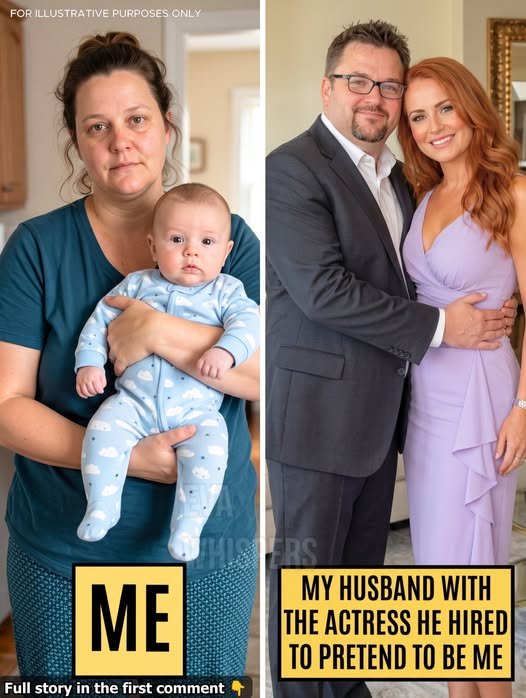
Three months after giving birth to our third son, I barely recognized myself in the mirror.
Not because I hated what I saw.
But because I was exhausted.
My body had changed in ways I was still trying to understand. My hips ached when I stood too long. My back hurt whenever I bent down to pick up a toy. Some mornings, even brushing my hair felt like an achievement.
I had three little boys depending on me. One was still waking up every few hours at night. Another was going through a phase where he only wanted me to tuck him in. And our oldest, Liam, had just started asking big questions about the world at the exact moments when I had no energy left to answer them.
So no, the gym was not on my mind.
What was on my mind was laundry. Bottles. School lunches. Doctor appointments. Bills. Homework. Diapers. Dinner. And trying not to cry in the shower because I was so tired.
My husband, Charles, didn’t see any of that.
He only saw the weight I had gained.
At first, his comments were quiet.
“Are you really eating that?”
Then they became sharper.
“Have you even looked in the mirror lately?”
And eventually, they became cruel.
“My God, don’t leave the house looking like that,” he said one afternoon while I was putting shoes on our toddler. “I’m embarrassed to be seen with… well, with someone like you.”
I froze.
Our son was right there, sitting on the floor with one sock halfway off, staring at us with wide eyes.
I swallowed the pain and said softly, “Charles, please don’t talk to me like that.”
He rolled his eyes.
“Oh, don’t be so sensitive.”
But I wasn’t being sensitive.
I was being wounded.
The Reunion
One Friday evening, Charles came home in a strangely good mood.
He walked through the door smiling, tossed his keys onto the table, and announced, “Guess what? My 20-year high school reunion is next month.”
For the first time in weeks, I felt a small spark of excitement.
A night out.
An actual adult evening.
A chance to wear a dress, put on earrings, and remember that I was more than just a tired mother moving from one chore to another.
“That sounds nice,” I said. “Maybe your mom can watch the boys. We haven’t gone anywhere together in so long.”
Charles looked at me like I had just said something ridiculous.
Then he laughed.
Not a warm laugh.
A cold one.
“You’re staying home.”
I blinked. “What?”
“I’ve already taken care of everything,” he said, loosening his tie. “I hired someone.”
I thought he meant a babysitter.
Then he smiled, proud of himself.
“I hired an actress. She’s going to pretend to be my wife for the evening.”
For a moment, I couldn’t breathe.
“What did you just say?”
“She’s beautiful,” Charles continued, as if he were describing a new car. “Elegant. Fit. Looks younger than most of the women from my class. I can’t wait to see everyone’s jaws drop.”
I felt the room tilt.
“You hired an actress to pretend to be me?”
He shrugged. “Not you exactly. Just my wife.”
“Charles,” I whispered. “I am your wife.”
His expression hardened.
“And that’s the problem.”
Those five words hit harder than any insult he had ever thrown at me.
I stood there in the kitchen, holding a burp cloth in one hand, my hair tied back messily, wearing the same sweatshirt I had worn since morning because the baby had spit up on everything else.
“You can’t be serious,” I said.
“Oh, I’m very serious,” he replied. “I want to walk in with a stunning woman on my arm and make everyone jealous. With you, that’s just impossible.”
I told him he was hurting me.
He didn’t care.
I told him marriage wasn’t a performance.
He said life was easier when people respected you.
I told him I had given him three sons.
He looked at me and said, “And somewhere along the way, you stopped trying.”
That night, I cried silently beside the baby’s crib so the children wouldn’t hear me.

The Actress
The reunion arrived on a Saturday evening.
Charles spent two hours getting ready.
He wore his best suit, the navy one I had picked out for him years ago when he had gotten promoted. He used the expensive cologne I had bought him for our anniversary. He even trimmed his beard carefully, humming to himself in the bathroom like a man preparing for a victory parade.
I sat on the edge of the bed nursing our baby.
He walked out, checked himself in the mirror, and smiled.
“Don’t wait up,” he said.
I looked at him.
“Do you feel even a little guilty?”
He sighed as if I were annoying him.
“Please don’t ruin my evening.”
Then he left.
Twenty minutes later, I saw a picture on his phone because he had carelessly left his shared tablet open on the kitchen counter.
There he was outside the hotel ballroom, standing beside a woman in a silver dress. She was beautiful, polished, smiling perfectly for the camera.
His hand rested proudly on her waist.
The caption read:
“Reunion night with my beautiful wife.”
My heart broke in a way I didn’t know a heart could break and still keep beating.
I turned the tablet face down and went to check on the boys.
My Father-in-Law Came Over
Around eight o’clock, the doorbell rang.
I wiped my eyes quickly, thinking maybe Charles had forgotten something.
But when I opened the door, it was his father.
Robert was standing there with a toolbox in one hand and a gentle smile on his face.
“Evening, sweetheart,” he said. “I told Charles I’d come by and fix that kitchen sink. Has he still not taken care of it?”
I tried to smile. “No. He hasn’t.”
Robert stepped inside, then paused.
He looked around.
The baby swing was moving softly in the living room. Toys were scattered near the couch. A laundry basket sat by the stairs. The house had the warm, chaotic look of a family with young children.
Then he looked at me.
“Where’s Charles?”
I opened my mouth, but no words came out.
Robert’s face changed.
He set the toolbox down.
“What happened?”
Something about his voice broke me.
I told him everything.
I told him about the comments. The humiliation. The actress. The fake photo. The way Charles had looked at me like I was no longer worthy to stand beside him.
Robert didn’t interrupt once.
When I finished, he stood quietly in the kitchen, his jaw tight and his eyes full of disappointment.
Finally, he placed a hand gently on my shoulder.
“Don’t worry,” he said. “I’ll take care of it.”
I didn’t understand what he meant.
“Robert, please don’t make a scene,” I said quickly. “I don’t want more trouble.”
He gave me a sad smile.
“My dear, trouble has already been made. I’m only going to tell the truth.”
Then he picked up his coat and walked back toward the door.
“Where are you going?” I asked.
“To the reunion.”
My stomach dropped.
“What?”
He turned around.
“Charles forgot one thing. That high school was my school too.”
The Man Everyone Remembered
I later found out what happened from three different people.
Robert had been a history teacher at Charles’s high school for over thirty years. He had taught half the people in that ballroom. Many of them still called him “Mr. Whitmore” with affection and respect.
The reunion committee had invited him as a surprise guest of honor.
Charles had known there would be former teachers there, but he had somehow missed his father’s name on the program. Or maybe he had never bothered to read it.
By the time Robert arrived, Charles was already enjoying himself.
He was laughing loudly near the bar, introducing the actress as his wife.
“This is my wife, Vivian,” he told people.
Vivian wasn’t even my name.
My name is Hannah.
The actress, whose real name was Sabrina, played her part well at first. She smiled, shook hands, and accepted compliments.
People told Charles he looked successful.
They told him his “wife” was stunning.
They told him he was lucky.
And Charles soaked it all in like sunlight.
Then the reunion host tapped the microphone.
“Ladies and gentlemen, before dinner, we have a special guest with us tonight. Many of you will remember him as the teacher who scared you into studying harder, then secretly helped you pass anyway. Please welcome Mr. Robert Whitmore.”
The room erupted in applause.
Charles turned pale.
Robert walked onto the small stage in his old brown blazer, the same one he wore to church on Sundays. He didn’t look angry. He looked calm.
That was probably what frightened Charles most.
Robert thanked the room. He spoke warmly about watching young people grow into adults. He talked about character, integrity, and how success was not measured by what car someone drove or how expensive their suit was.
Then his eyes found Charles.
“Tonight,” Robert said, “I was reminded that sometimes a man can graduate from school and still fail the most important lessons.”
The room grew quiet.
Charles lowered his glass.
Robert continued.
“I came here proud to see former students. But I also came here deeply saddened by something I learned tonight. My son, Charles, chose to hire an actress to pretend to be his wife because he was ashamed of the real woman waiting at home.”
Gasps moved through the ballroom.
Sabrina stepped back from Charles as if his hand had burned her.
Charles’s face turned red.
“Dad,” he hissed, but Robert kept speaking.
“My daughter-in-law, Hannah, recently gave birth to their third child. Her body carried life. Her hands care for their children. Her heart keeps their home together. And while she was home caring for his sons, my son stood here pretending another woman was his wife.”
The silence became heavy.
Robert looked directly at Charles.
“You wanted everyone’s jaws to drop, son. I believe you succeeded.”
Someone at the back whispered, “Oh my God.”
Sabrina took the microphone from the host, her face flushed with embarrassment.
“I need to say something,” she said. “I was hired through an agency for a private appearance. I was told his wife was unable to attend and that this was a harmless joke. I had no idea he was humiliating the mother of his children.”
She turned to Charles.
“I’m sorry, but I won’t be part of this.”
Then she walked out.
No dramatic slap.
No screaming.
Just dignity.
And somehow, that made it even worse for him.

The Lesson
Robert stepped down from the stage and approached Charles.
People moved aside.
Charles looked like he wanted the floor to swallow him.
“Dad, you had no right,” he muttered.
Robert’s voice was low but firm.
“No right? I have every right to be disappointed in the man I raised.”
“You embarrassed me in front of everyone!”
Robert nodded slowly.
“Yes. It hurts, doesn’t it?”
Charles said nothing.
Robert leaned closer.
“You felt embarrassed for five minutes. Hannah has been living with your cruelty for months.”
Charles looked away.
Then Robert said the words that changed everything.
“I was going to give you the down payment for a bigger house. I wanted the boys to have a yard. I wanted to help you and Hannah breathe a little easier.”
Charles’s eyes widened.
“But after tonight, that money will not go to you.”
“Dad—”
“It will go into an account for Hannah and the children. If a bigger house is bought, her name will be on it. If repairs are made, I’ll pay the contractor directly. If the boys need anything, I’ll make sure they have it. But I will not reward a man who shames his wife to impress strangers.”
The room was still silent.
Robert picked up his coat.
“Go home, Charles. And for once, don’t think about how you look. Think about who you are.”
Then he left him standing there.
Alone.
The Door Slammed
A few hours later, I was putting the boys to bed when I heard the front door slam.
My whole body tightened.
Charles stormed into our bedroom, still wearing his suit, his tie loose around his neck and his face twisted with anger.
“Was this your doing?” he shouted. “God, I nearly died of embarrassment!”
The baby stirred in his bassinet.
I held up a hand.
“Lower your voice. The children are sleeping.”
He laughed bitterly.
“Oh, now you care about appearances?”
I stared at him.
“No, Charles. I care about our children hearing their father scream at their mother.”
That stopped him for half a second.
Then he snapped, “You told my father!”
“He asked where you were. I told him the truth.”
“You humiliated me!”
Something inside me finally rose.
Not rage.
Not revenge.
Strength.
I looked at him and said, “No, Charles. You humiliated yourself. You hired a stranger to pretend to be your wife because the real one had the audacity to look like a woman who recently gave birth to your child.”
He opened his mouth, but I kept going.
“You stood in a ballroom and lied about me. You lied about our marriage. You smiled while I sat here holding our baby, wondering how the man I loved became someone who could be so cruel.”
For the first time, his expression shifted.
I don’t know if it was guilt.
Maybe shock.
Maybe just the realization that I wasn’t going to shrink anymore.
“I wanted people to respect me,” he said weakly.
“And did they?” I asked.
He didn’t answer.
I sat on the edge of the bed and looked at him, really looked at him.
The expensive suit. The polished shoes. The man who had wanted to appear successful so badly that he forgot what success actually meant.
“Charles,” I said quietly, “your wife is not an accessory. I am not something you upgrade for one evening because you want applause.”
His face softened, but I didn’t mistake softness for change.
Not yet.
“I’m sorry,” he whispered.
I wanted those words to heal everything.
They didn’t.
Because some apologies arrive after the damage has already learned your name.
What Sorry Needed to Mean
The next morning, Robert came over again.
This time, he brought breakfast.
Not flowers. Not grand speeches. Just pancakes, fruit, and coffee.
He sat at our kitchen table while the boys ate happily, unaware of the storm that had passed over our family the night before.
Charles came downstairs looking exhausted.
Robert didn’t yell.
He didn’t need to.
He simply said, “Sit down.”
Charles sat.
Robert looked at him and said, “An apology is not a sentence. It is a change in behavior.”
Charles stared at his hands.
“You will apologize to your wife properly,” Robert continued. “You will apologize to your children for the way you’ve spoken in this house. You will start counseling. And you will learn that the woman who gave you a family deserves honor, not shame.”
Charles looked at me.
“Hannah,” he said, voice breaking, “I was cruel. I was shallow. I cared more about what strangers thought than how you felt. I don’t expect you to forgive me today. But I am sorry. Truly sorry.”
I listened.
I didn’t rush to comfort him.
That was new for me.
For years, I had been the one smoothing things over, calming him down, making excuses, protecting the peace even when the peace cost me pieces of myself.
This time, I let the silence sit.
Finally, I said, “If you want this family, you don’t get to just say sorry. You have to become safe for us again.”
He nodded.
“I will.”
“I’m not promising forgiveness today,” I added.
“I know.”
“And if you ever speak to me like that again, in front of our children or anywhere else, I will leave the room. Maybe the marriage.”
His eyes filled with tears.
“I understand.”
For the first time in a long time, I believed he might.
Not because he cried.
But because he didn’t defend himself.

The Real Beginning
Change did not happen overnight.
This is real life, not a movie.
Charles still had to unlearn the ugly habit of measuring worth by appearance. He started therapy. Then we started marriage counseling. He deleted the fake reunion photo and posted an honest apology, not because I asked him to, but because he said he needed to stop hiding behind pride.
Some people judged him.
Some people respected the honesty.
I didn’t care either way.
My healing was not a public performance.
Robert kept his promise. He helped fix the sink, then the broken back steps, then the leaky roof. He opened savings accounts for the boys and made sure my name was on every family document that mattered.
But more than that, he kept showing up.
He came by on Sundays so I could nap.
He took the older boys to the park.
He told me, “You are not just the mother of my grandchildren, Hannah. You are my daughter too.”
I cried when he said that.
Because sometimes the person who defends you is not the one who promised to love you at the altar.
Sometimes it is the one who sees the truth and refuses to stay silent.
Months passed.
My body slowly healed.
Not because Charles deserved a smaller version of me.
Not because the world needed me to become acceptable again.
But because I deserved care. I deserved strength. I deserved to feel at home in my own skin.
One evening, almost a year after the reunion, Charles and I attended a charity dinner together.
I wore a deep blue dress.
My hair was curled softly around my shoulders. My body was still not the body I had at twenty-five. It was the body of a woman who had lived, carried children, endured heartbreak, and chosen herself again.
Charles looked at me before we left.
For a second, I braced myself out of old habit.
But he only said, “You look beautiful.”
I studied his face.
There was no performance in it.
No impatience.
No embarrassment.
Just quiet sincerity.
I nodded.
“Thank you.”
At the dinner, he didn’t let go of my hand.
When someone asked how long we had been married, Charles smiled and said, “Long enough for me to learn that I married far better than I deserved.”
I didn’t melt.
I didn’t forget.
But I did feel something loosen in my chest.
Because regret can be painful.
But sometimes, when a person truly faces it, regret can become the doorway to becoming better.
The Wife He Should Have Been Proud Of
People later asked me if I was glad Robert exposed Charles at the reunion.
The answer is complicated.
I was not glad I had been humiliated.
I was not glad my marriage reached such a painful place.
But I was grateful that someone finally stood up and said, “This is wrong.”
Because cruelty grows in silence.
And healing often begins when the truth is spoken out loud.
Charles once wanted everyone to envy him because of the woman on his arm.
He learned, in the most embarrassing way possible, that a man’s worth is not proven by who he can show off.
It is proven by how he treats the person who stands beside him when life is messy, exhausting, and real.
As for me, I stopped waiting for someone else to decide whether I was worthy of being seen.
I was worthy in the kitchen with a crying baby in my arms.
I was worthy in oversized sweatshirts and tired eyes.
I was worthy before the weight, during the weight, after the weight, and beyond the weight.
I was worthy when Charles forgot it.
And I was still worthy when he finally remembered.
That reunion did not destroy our family.
It exposed the cracks.
And painful as it was, those cracks let the truth in.
My husband hired an actress because he was ashamed to be seen with me.
But by the end of that night, the only person people pitied was him.
And the woman he tried to hide?
She finally learned she never needed to be hidden at all.